
eXtensions - Monday 29 June 2026
By Graham K. Rogers
Om Malik, RIP. Sony have withdrawn several titles from Playstation. A practical look at using Apple Health and the Watch to monitor potential issues. The AI need for chips makes Apple put the prices up, but did they have to include the MacBook Neo? Micron blames Apple's negotiating skills for a lack of investment in fabs. We do not use AI in our house to generate sunbeams in photos.
When I read in the newsletter a couple of weeks ago that Om Prakash Malik was taking a few days off I thought little of it: summer break, business, vacation. . . . This week I was taken aback when the newsletter and the website announced that he had passed away. My shock is surpassed by the massive loss to his family of course, and to the tech industry. On the Om site are a number of links that can be used to make suitable comments and to find out more about his influence.
 Sony are in the news this week after they announced that customers who bought their videos to run on Playstations, are going to have them removed come 1 September. Buying a movie of course, as Rob Beschizza (BoingBoing) reminds us does not mean that the user owns it. It is merely a license to play. A licence which can be revoked.
Sony's distribution deal with Studio Canal is ending, so that means customers in the UK are losing access to 551 movies. Rob reminds us that "The company removed 314 titles from German accounts and 137 from Austrian accounts on Aug. 31, 2022, citing the same licensing rationale. . . ."
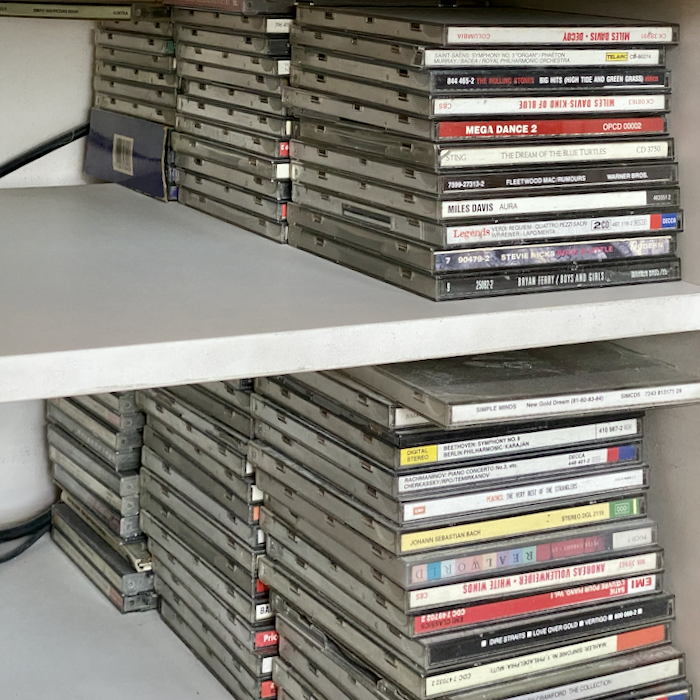
This reminded me of Sony's Rootkit installation on PCs in 2005. At that time all our music and software was distributed on compact disks (CD). Without telling people who bought CDs, those disks automatically installed software that changed the OS, allowing Sony to monitor use, including copying and sharing. Once it was discovered there was outrage, and litigation. That cost Sony much money and considerable damage to its reputation. A good overview (with sources) is available on Wikipedia. Macs were not affected owing to the way OS X (in those days) was designed.
Although OS X and macOS are based on UNIX, unlike that OS and its derivates, there is no Root. That is why, when a real Root command needs to be run in an Admin account, the sudo command is used and an Admin password needs to be entered. That is also why I work in a User account (another layer). I have not bought any major Sony product since.
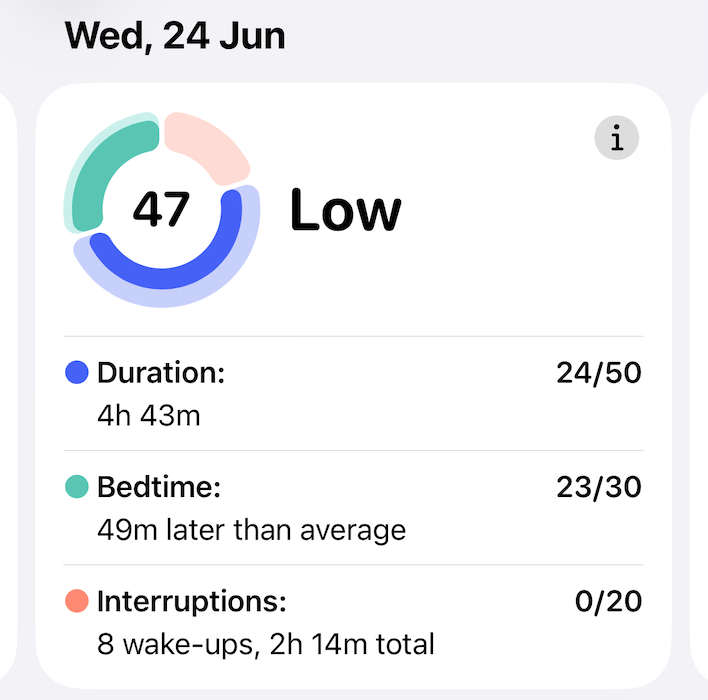
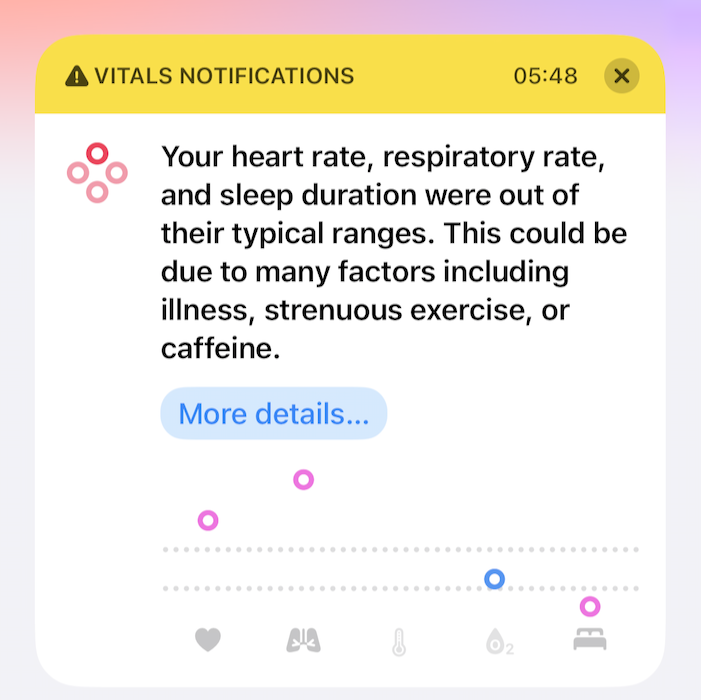
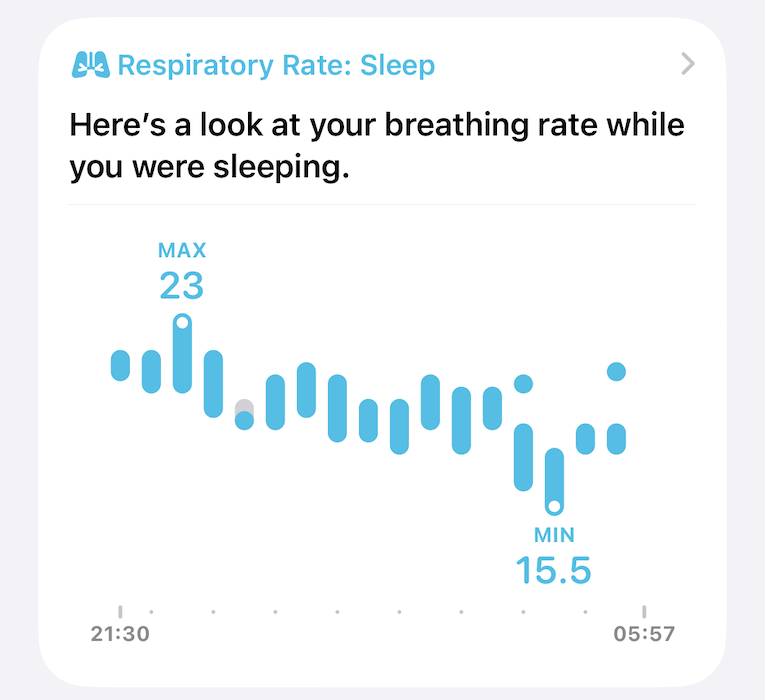
I felt a bit low last Tuesday. By early evening, I realized I had a fever so went to bed early, and covered myself with extra layers of bedding. As expected, I sweated a lot. I usually sleep with no covers, but wear a t-shirt and other light clothing. I did not sleep well, but woke feeling slightly better. I checked the Sleep Cycle app that I have been using for a while, That showed far less sleep than normal with some coughing, talking (it is interesting to play these back), and a couple of dreams. It also showed an unusually high heart rate: an indicator of illness. Apple sleep gave me a low score for the night, unsurprisingly, and reported just under 5 hours actual sleep (scores - 90 Tuesday morning, 47 Wednesday, and 90 Thursday). This was followed by a notification on Vitals: unusual heart rate, respiratory rate, and low sleep. Blood oxygen was shown as normal. With all these negatives, had I not felt considerably improved when I woke up, I would have been heading for the doctor.
|
|
|
The ability to record information, much of it automatically, using the Apple Watch, is of great value, especially as one ages. It is all very well to shrug off a feeling of being under the weather, but if the statistics show a problem, it is probably wise to take action. In the past, weight loss and high temperature led to the discovery of gallstones. On another occasion, a rise in normal body temperature took me to a local hospital where I was diagnosed with Covid (the one and only time).
As well as distances moved and exercise, the Watch also helps with monitoring sleep (above), and heart rate. With the iPhone (where watch data is added to the Health app, I also include weight (via the Withings app), and temperature. I had been adding blood pressure data manually although I have now found how to link the Omron app to Apple Health: not as easy as with the Withings or Qardio apps. Hydration is added automatically using a Hidrate Spark flask with its app, to which I also add some fluid intakes manually, like fruit juice and coffee in the morning. I occasionally run the electrocardiogram app on the Watch, which (again) is a guide to my health not a diagnosis. The overall picture gives me some assurance that everything it ticking over as it should be, and I am able to note unusual changes and take any necessary steps, which may well mean a medical consultation.
Some special features, like the Electrocardiogram took a while to reach these shores owing to reticence by the medical profession. There was some worry about users being shown false readings, which (it was suggested) might mean them visiting the doctor when nothing was wrong, or not visiting when there was a problem. There was a similar delay with the Sleep Apnea feature which, as Will Shanklin (Engadget) explains, when looking at the only two watches that offer a Sleep Apnea feature (Apple and Samsung), does not warn that the problem exists, but detects the conditions that suggest it might exist and that it is time for medical advice
One of my jobs at the Faculty of Engineering is to advise anyone there (staff, students, academics) when they are producing English writing output. That includes posters: a public display of the faculty. Not all take advantage of the help available. As we are approaching the start of another academic year, a few of the posters that are intended to inform the arriving freshmen and graduate students, have appeared in my inbox. Most take only a few minutes to check. Problems include plurals, prepositions and a couple of other grammar points. I also look at spacing, and standardization. I make comments on general design aspects, too. I have a couple of pet hates that include emojis and exclamation marks. I think the latter should only be used in comics.
I looked at one poster last week and made some comments. The next day, the young lady who had created this turned up in my office with her computer to discuss the suggestion. I was surprised to see she was using a MacBook Neo. She had just bought this and was still finding her way round. She had not used a Mac before, but has friends with MacBook Air and MacBook Pro devices. She wanted to have a Mac and the price - just below 20,000 baht here - made the winning argument here. But see below.
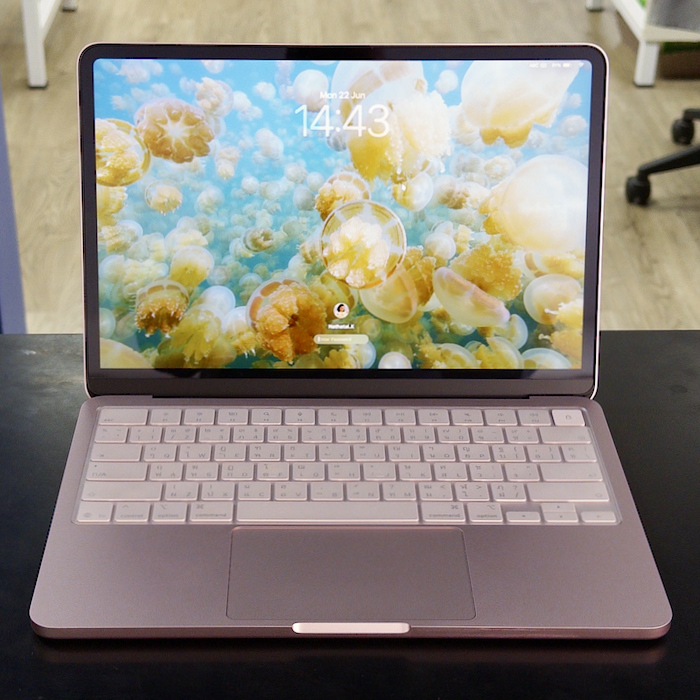
I have noticed in the last few years how far more students are using Apple devices, with many doing good work with the iPad and some working on Macs which are not generally considered Engineering machines. AutoCAD and other drawing software are available for Macs, and several other apps make the platform useful for engineers. Some proprietary engineering software is PC only. Many faculty members also use Macs these days. It is a far cry from when I first came here and a check of a class I was teaching found that one student only had a PC. Within a couple of years that had changed to one student only did not have a PC, although that was coming soon. Now there are Macs everywhere and Apple shifted the goalposts even more with the MacBook Neo. However. . . .
Apple had warned that, because of the increasing costs of silicon, due to AI growth among other factors, prices of its products would rise. I think most people understood the situation. That made Thursday's announcements from Apple about price increases inevitable, if unwelcome. It also looks as if prices here have taken an extra hit. In the USA the MacBook Neo basic model is up from $599 to $699, but in Thailand the basic model is up from 19,900 to 24,900 baht. There may be other factors of course, but it is hard to accept that $100 + 7% (VAT) can be converted to an additional 5,000. A quick check online shows $107 as 3566.31 so I question where the other 1433.69 baht came from.
As often happens here, users in Thailand end up paying more for far less with reduced services, and features that are unavailable here. Some of this is due to legal restrictions (e.g. banking and health, as well as satellite access), but users still pay the same (or usually more) for an Apple product. When the iPhone 17 was released last September, most models cost more here than in the US, even taking 7% VAT into account. While the 17 was 2,740 baht more, the iPhone Air was 5,941 extra, and the iPhone 17 Pro a swingeing 6,540 baht over US prices. I have a hard time finding any justification for this extra on top of the rise of the MacBook Neo, apart from the point that 5,000 is a nice round figure. My own MacBook Neo was 22,900 baht when I ordered it in March. That is now 27,900 so 5,000 has been added to that as well. That has taken the gilt off the gingerbread.
The special position the MacBook Neo has in Apple's lineup shows Apple might have benefitted more from a more gentle treatment of this specific open-the-door product. My colleague (above) wanted to join the Apple club and the pricing, just below 20,000 baht, was the Goldilocks moment for her. From reports on sales, this was the case for many others too. I would include myself. While I have other Macs and devices from Cupertino, that pricing, even though I paid extra for the 512GB storage, was a major attraction. In his argument for special treatment, Oliver Haslam (AppleInsider), writes that there is "a case to be made for the MacBook Neo being the kind of halo product that should have withstood price pressures". Apple had scored heavily with the introduction of the MacBook Neo which had many new users interested as is evident by the high sales. They also had manufacturers of PCs scrambling to try and match the pricing and the quality. Apple has squandered that advantage.It is not only Apple (and its users) who have been affected by the way AI growth is sucking up the chips that are in our devices. XBox has also announced a series of price increases, starting at $100 for the Xbox Series S 512GB. Lauren Forristal (TechCrunch) has information on this. It is also reported that Sumit Sadana, the chief business officer of Micron, has hinted that Apple was part of the cause of silicon price rises.
The company reported its figures recently and made a healthy profit, but the gripe is that because the unnamed company makes a hard deal when it orders chips, Micron was "unable to fund capacity expansion during the industry's previous slump". Hartley Charlton (MacRumors) cites comments made in the Wall Street Journal (Paywall) where Apple's price rises had been reported. On the same page, I note the headline, "Chip Makers Are Profiting Off AI at the Expense of Just About Everyone Else". That article, by James Mackintosh, focuses on Micron and its explosive growth. The unexpectedly high profits reported by the company also boosted then share price by some 14%. I guess that was down to Apple as well. Writing in the Guardian, Graham Wearden reports that "[s]hares in chipmakers have surged in the first half of this year" with the prices of shares in some companies tripling. Chip makers in Asia and USA have all seen considerable rises in their valuations.
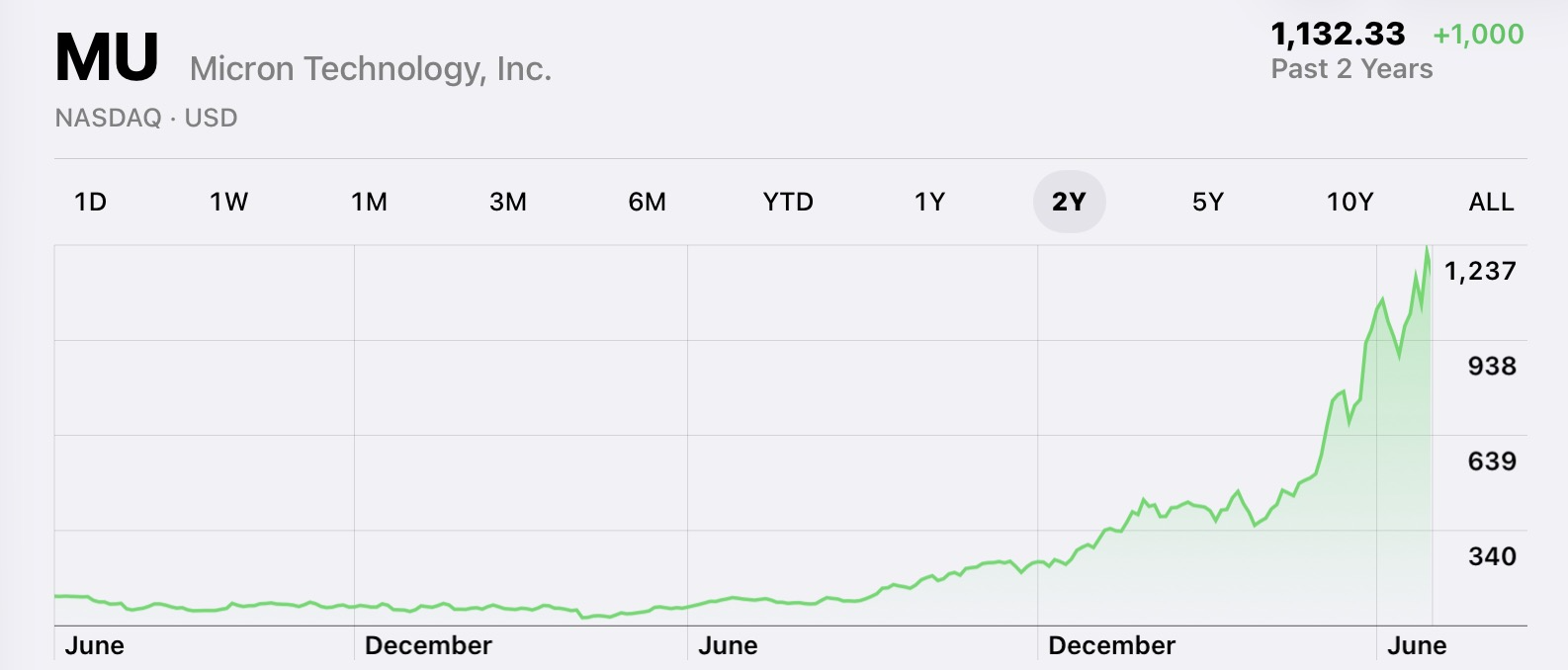
While mentioning Micron in his content, Michael Bukhardt (9to5Mac) puts the blame (as do most people) on the expansion on AI data centers, and mentions that Micron "has started building a couple new memory fabs" and that these will come online in the next couple of years, but any price reductions will not come for a while (if ever - I am doubtful). Burkhardt also mentions that Apple is lobbying Congress to be allowed to buy chips from certain Chinese companies. He notes that although Apple isn't "technically" blocked from doing business with these blacklisted organizations, there might be an "issue with government officials using Apple devices."
I used photo editing software from a specific developer for a number of years. Originally, there was a superb black and white editing application which worked well with Aperture, and I bought a number of presets for that. Then the software was deprecated. Although users were told that the purchased presets could be used in the replacement, color editing application, not all worked. A while later, another app was introduced and all users were encouraged to sign up for that. By this time it was looking more like a subscription service as every once in a while the software that had been paid for was no longer active and we all had to move on.
What actually made me dump the software was the introduction of special features, including sunbeams. They look nice when they work naturally, but if the rest of the image is off and (for example) the light sources point in the wrong direction, those sunbeams look very shady indeed. I do not like this false use of effects in any of my images. I am fine with enhancements (contrast, brighten, sharpness et al), repairs, crops, or even filters that make more of the original basic image (RAW or negative). Any time I see sunbeams in a photograph online, I am immediately suspicious now.

|

|

|
|
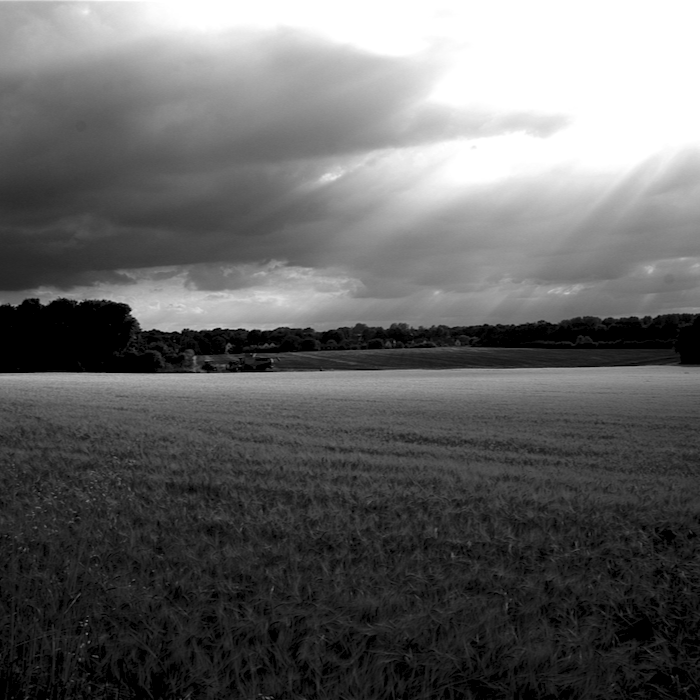
A note on the image in the generator building (above). I have visited Bhumipol Dam in Tak province 3 times. Each time, the student party I was with arrived late morning. The first time I managed a low resolution shot of the sunbeams streaming through the high windows. I promised myself I would improve the next time, but with the sensors in use, no photographs were allowed. The third time (2018) I took the fully mechanical Hasselblad, although this time photography was permitted. I waited until the student group had finished their selfies and began to move underground to see the control room and the generators. I took the shot - certainly not as good as the famous photos of New York's Grand Central Station - and captured the sunbeams. All I do is wait for Nature to cooperate.
 I sometimes feel like a voice in the wilderness when criticizing the use of AI in academic writing (or photography) although I did have a couple of successes this week. One academic colleague I discussed this with recognized the way the use of AI tools had indirectly delayed the acceptance of a paper. I was asked to look at it and the journal editor had been right to call out the quality. My colleague accepted that there is little point in asking a native speaker to check a paper, then run it through an AI grammar checker. I pushed the point asking, Why bother with AI when there is a perfectly good native speaker on the staff?
I am mildly insulted by the graduate students who use AI after asking for advice, particularly as the AI changes words that were perfectly fine, substituting others, some of which show red AI flags to editors: delve (less used now), crucial, critical and foster set my antennae going immediately. My colleague also recognized that when the students use AI for generating ideas (don't they have brains?) and for research or writing, they are missing major learning opportunities that for years were reasons for university study: in the difficulty lies the lesson. It was refreshing to be sent a paper at the weekend that had much that was directly translated from Thai. I can work with that.
It appears that the Ford Motor Company in the USA has learned an expensive lesson in the use of AI and is now rehiring some of the software engineers who had been dismissed when AI was believed to be the answer to Ford's prayers. Anthony Ha (TechCrunch) reports that "350 veteran engineers", some of whom were former employees were hired "after artificial intelligence and automated systems failed to deliver the desired quality level." Why am I not surprised? They thought that introducing artificial intelligence would automatically improve the product. Once the humans fixed the AI output, the company found that warranty and recall costs had been lowered, which translates into millions of dollars. Those determined to bring in AI might want to reconsider the workflow. Like my colleagues are finding, humans may still be needed to check the AI output.
Graham K. Rogers teaches at the Faculty of Engineering, Mahidol University in Thailand. He wrote in the Bangkok Post, Database supplement on IT subjects. For the last seven years of Database he wrote a column on Apple and Macs. After 3 years writing a column in the Life supplement, he is now no longer associated with the Bangkok Post. He can be followed on X (@extensions_th). The RSS feed for the articles is http://www.extensions.in.th/ext_link.xml - copy and paste into your feed reader. No AI was used in writing this item.

For further information, e-mail to
Back to eXtensions
Back to Home Page