eXtensions - Tuesday 21 April 2026
By Graham K. Rogers
Just before the quarterly financial report, it was announced that Tim Cook is to step down from the Apple CEO position, John Ternus will step up; and Jonny Srouji now has responsibility for a revised hardware section. There are still questions on how Apple will respond to A18 shortages after the success of the MacBook Neo. Microsoft thinks it has the answer. After Lead Children, I watched a short series from Brazil on a radiation disaster in Goiânia. Does Netflix really want users to take its AppleTV interface seriously?
It was not wholly unexpected, but the news that Tim Cook is to step down (Juli Clover, MacRumors), still came as a small surprise. The timing of the announcement, which also reveals (unsurprisingly) that John Ternus will be appointed CEO to take Cook's place, is just over a week before Apple's Q2 2026 financial report. Juli Clover, whose article was the first in my timeline, reports that Cook will continue through the summer and Ternus will take over on 1 September: "Cook is going to transition to executive chairman, and he will "assist with certain aspects of the company, including engaging with policymakers around the world."" John Ternus will join the board of directors.
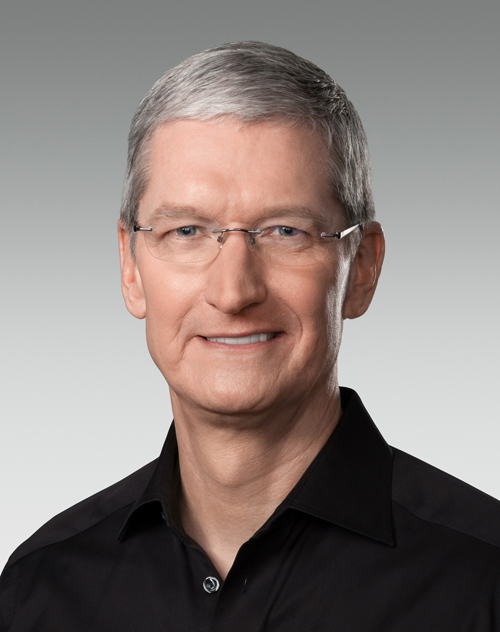
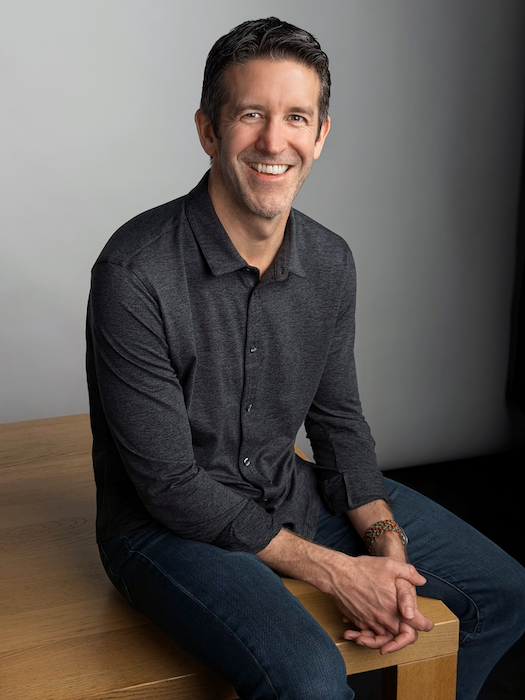 Apple put out a press release with comments from Cook and some outline information about John Ternus, although he is already well known to those who follow Apple. There are sure to be other comments about this succession. Images of Tim Cook and John Ternus are used here courtesy of Apple. Andrew E. Freedman (Tom's Hardware) reports on Cook's stability, but notes there were some areas he faltered in. MacWorld calls it "a shocking announcement" despite this being anticipated for months; and no one has gone into panic mode. I would recommend a new writer of headlines.
Despite years of anti-Cook comments, almost from the moment he was appointed, Mac Daily News manages, simply, a tempered, "The end of an era... and the start of a new one!" In a related comment, Chance Miller (9to5Mac) notes that Jonny Srouji is to become Apple's chief hardware officer, overseeing Apple hardware. Further to this, Chance Miller (9to5Mac) reports that Srouji's new appointment brings together the hardware engineering and hardware technologies divisions. He adds that this unit now has 5 areas:
The way this was rolled out immediately following the announcements about Cook, Ternus, and Srouji, is clear evidence that there was much planning behind all 3 announcements nothing shocking about that, is there?
In its short existence, the MacBook Neo has generated more column inches, at least online, than any other Apple product for years apart from the initial iPhone (and the iPhone 4, perhaps). It quickly became apparent that the new device was a hit. That has brought about the problem of chip shortages with the way the device was manufactured with binned A18 chips. For an outline on this, I suggest the column by Jason Cross (MacWorld). One of the ideas I speculated on was Apple moving to an early release of a MacBook Neo using the A19 chip. Most tech writers discussing the A19 looked to some time next year. I thought that Apple could bring that forward to later this year (perhaps September) which would be good for end of year sales. There is now an added spur with John Ternus taking over then. Having just bought a 512GB version of the MacBook Neo, I would not be at all disappointed if Apple were to do this.
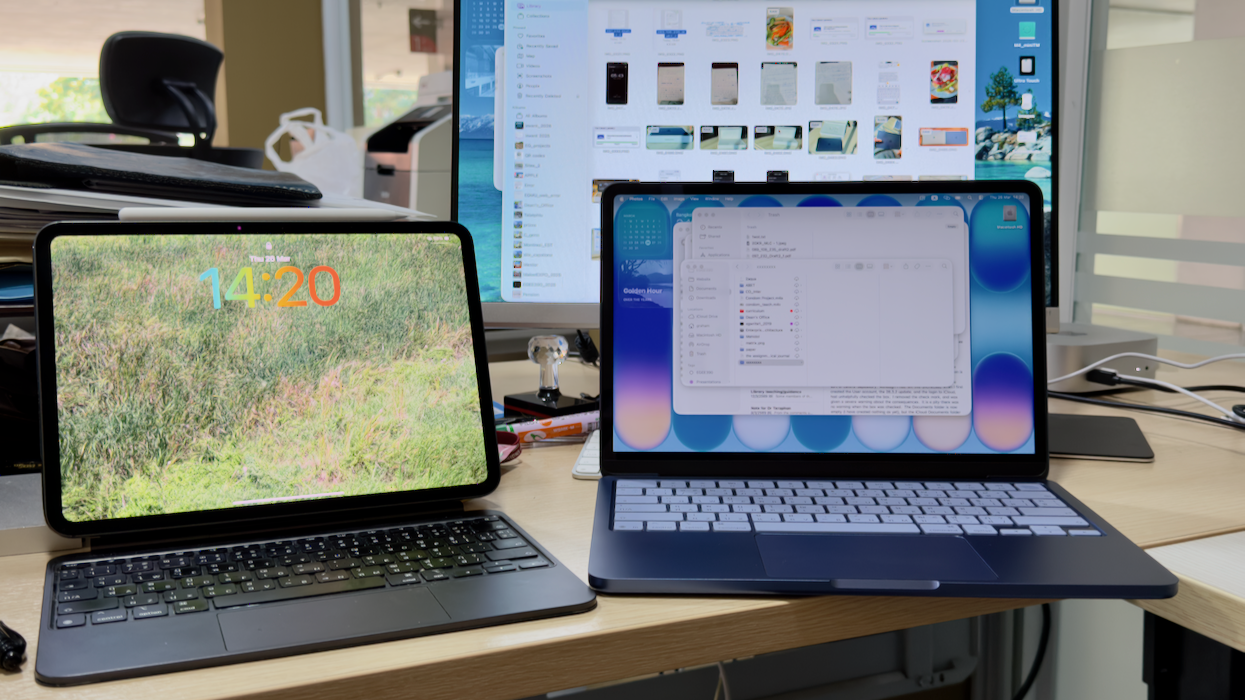
This week, Jason Snell also considers the early development of a second version. He suggests that such a move is not an unusual precedent as Apple does sometimes update devices in the same year, citing (for example) the expected M5 and M6 MacBook Pro update this year. Although there are some reports that these could now be delayed with the worldwide shortage of chips. Snell also rehearses some of the other options, but with his wider knowledge of the industry explains why a new iteration of A18 chips is unlikely, and speculates on how Apple might strategize such a new release. I always have the philosophy that as soon as I have bought a new device it is out of date, so any A19 development on this computer will not be a disappointment to me although I will probably not buy one. Maybe the A20? . . .
I had to blink last week, a day after reading about the price increase for the Microsoft Surface which takes it to almost double the price of the MacBook Neo: great timing. Chance Millier (9to5Mac), in what must be a somewhat tongue-in-cheek comment, writes that Microsoft has come up with a new way to drag students away from the MacBook Neo. Their solution: "college students in the US can score 12 months free of Microsoft 365 Premium and Xbox Game Pass Ultimate with the purchase of an eligible PC, plus a free custom Xbox controller." So much for the millions of students elsewhere. Acer, Asus, Dell, HP, and Lenovo have signed up and the more expensive Surface is also eligible. That (approximately) $230 offer is also open to those who have not subscribed before. The basic MacBook Neo starts at $499 for students ($599 for the rest of us); the Surface now starts at $1099. Miller thinks that this offer isn't going to move the needle at all. He also notes that most colleges in the USA (and where I am) have licenses for those studying and working at those establishments to use the software while they are there.
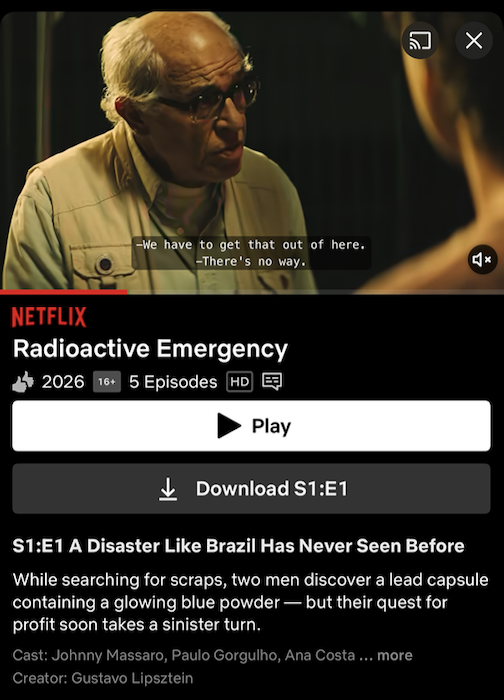
After watching the Polish series, Lead Children on the pollution and problems that a doctor faced, trying to get families and officialdom to react to the high risk that the children and everyone faced, I followed that with a series from Brazil, which examines a accident involving the radioactive material, Cesium 137. Like Lead Children, also on Netflix, Radioactive Emergency is based on an actual event that occurred in 1987 in Goiânia, south-central Brazil.
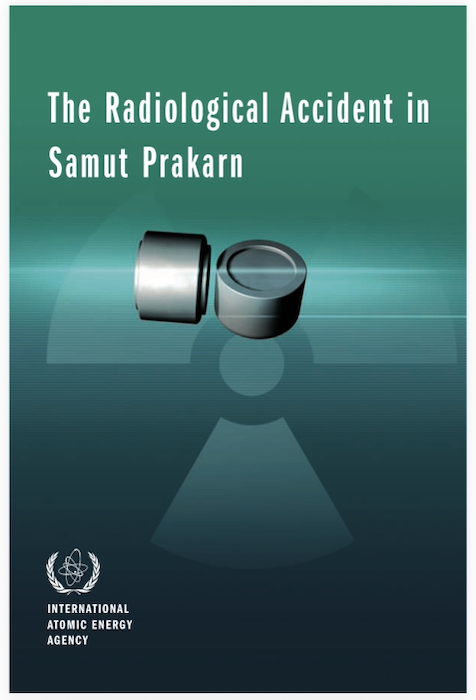
There were significant similarities between the opening of this series - when abandoned x-ray equipment was removed and the lead container sold for scrap value - to an event in Thailand. In early 2000, a similar device, this time containing an unlicensed Cobalt-60 radiation source was disposed of improperly in Samut Prakan. That too was broken open by those who were hoping to make some income from the contents. Over 1800 people were exposed to the ionizing radiation. Ten of those were hospitalized and three died from the effects. There is a good summary with a number of links on Wikipedia. Fortunately, unlike in Brazil, most of the contaminated material was recovered fairly quickly.
I remember that shortly afterwards, all universities were contacted to check any equipment that used a radioactive source material and on any disposals. We had one device for research on medical imaging, but that had been disposed of professionally, and there was no risk. There was a later incident in 2008 when a sealed container with Cesium 137 was found by a scrap dealer who recognized the trefoil symbol and notified the authorities.
With the situation in Brazil, it was some two weeks before people began to realize the sicknesses that some were suffering were connected to the disposal of the medical equipment. Fortunately, a skilled scientist was visiting his family home and was contacted by a friend treating the patients. The potential scale of the problem quickly became apparent to this young scientist. He was able to contact authorities, and with some clever persuasion, convinced them of the risk. They began to take action. He also contacted one of the main nuclear scientists in Rio de Janeiro who traveled to the area. He was quick to confirm the young scientist's early findings and insisted on the local politicians, taking strong actions, even though there was some reluctance.
As well as the political foot-dragging, considerable resistance came from the scrap dealer and other related people who were more concerned about saving their business and homes, and not being blamed for any misdeed. The closing scenes of Episode 1 had the scientist from Rio de Janeiro, warning of the potential for the spread of the stadium if the authorities did not act quickly. The cameras moved to the countryside and back to the scrapyard where blue radiating light could be seen, confirming the severe danger.
|

|
The way it had been spread by the scrap dealer was highlighted in Episode 2 with some jaw-dropping scenes of the family playing with the Caesium-137. Through the remaining episodes (3-5), the screening, the treatment of patients and the efforts at mitigation - sometimes to considerable resistance - were portrayed. Not everyone came out of this looking good. However, the event became a blueprint for how authorities should act, and this would have helped in the Samut Prakarn contamination. There is a report from the International Atomic Energy Agency (IAEA) on the event in Thailand. I was able to download this and read the 60 or so pages. It is sobering. I also found a (longer) document from the IAEA on the Goiânia contamination, although I have yet to read this.
 While we are on Netflix, when I was watching The Man in the High Castle, I was annoyed by the new interface that was offered by the app on AppleTV. It wasn't just me and soon after I saw several comments online. Now Chance Miller (9to5Mac) has also written on this controversial and unwelcome change that "makes the most common interactions more cumbersome and blocks users from using platform-specific Apple TV features."
He reports that there have already been subscription cancellations, and adds that the Netflix "player botches even the most basic of tasks, such as requiring multiple button presses to rewind if you happened to miss a piece of dialogue" - one of my frequent annoyances. John Gruber (Daring Fireball) also picks up on Miller's comments and adds a view of his own. He is not a fan of the Netflix app on Apple TV: "Why would users of one platform care what the Netflix player is like on other platforms? Apple TV users buy Apple TV boxes because they want the Apple TV experience."
Zac Hall (9to5Mac) also uses the term, "botches" in relation to the Netflix interface on Apple TV, but reports too that "Netflix is updating its iPhone app with a vertical video feed." I am not a fan of vertical (portrait mode) videos at all although these are widespread now. I could not imagine watching a movie or a TV show in such a format. It would be more useful if the current small display on the iPhone could be rotated when the device were turned, so that a more easy to see landscape transmission were visible. Hall also comments that the current, long-time Chairman and co-founder, Reed Hastings, is stepping down.
I become frustrated and annoyed every time I reach for the controls when using Netflix now. When I look at other video media when using Apple TV I find it easy to use the simple and familiar interface whatever the source. But not Netflix. Who does the developer ask when they make these unwanted changes?
Graham K. Rogers teaches at the Faculty of Engineering, Mahidol University in Thailand. He wrote in the Bangkok Post, Database supplement on IT subjects. For the last seven years of Database he wrote a column on Apple and Macs. After 3 years writing a column in the Life supplement, he is now no longer associated with the Bangkok Post. He can be followed on X (@extensions_th). The RSS feed for the articles is http://www.extensions.in.th/ext_link.xml - copy and paste into your feed reader. No AI was used in writing this item.

For further information, e-mail to
Back to eXtensions
Back to Home Page