
eXtensions - Sunday 8 February 2026
By Graham K. Rogers
We are expecting updates to Apple's operating systems quite soon, and there are expected to be new hardware devices too with updated M5 chips. While Apple's recent financial report pleased most analysts, those looking at AI as a business see clouds on the horizon. Apple announced several new movies and shows last week. Bad news for staff and readers of the Washington Post.
Some sources, including Malcolm Owen (AppleInsider) are predicting the imminent arrival of iOS 26.3 and other OS updates from Apple. I have even seen some references to the 26.4 beta and new features. Some sources have also linked this 26.3 release with a potential M5 MacBook Pro update, particularly noting the low prices of the current devices. Retail outlets are rushing to clear the stock. Juli Clover (MacRumors) adds to this, reporting that two new M5 chips have been identified in the release candidate (RC) of iOS 26.3 [sic]. As it is now the weekend, I would expect the updates some time next week.
The mystery chips could be the M5 Max and M5 Ultra (Marko Zivkovic, AppleInsider). If that is the case, which Macs would be likely candidates? My M1 MacBook Pro is still working perfectly and is adequate for my current needs, although I might consider an M6 version later in the year, particularly if the macOS 27 update is not available for earlier Macs like the M1. That might sound odd, but the M1 MacBook Pro was first released in November 2020 and I bought mine as soon as it was available here: 5 years plus. That is a good life for any modern computer. Although I used the touch bar often, particularly with its auto-suggest when writing, I have weaned myself off of that now, but this Mac still meets all my needs: like the iPad Pro it was a good investment.
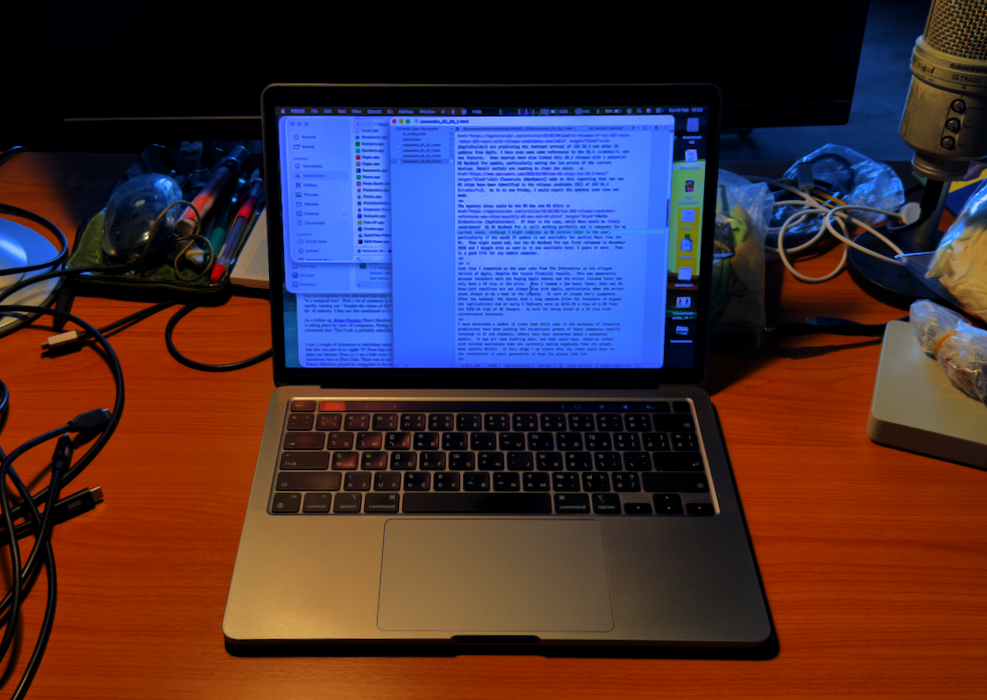
Last time, I commented on the sour note from The Information on the alleged failure of Apple, despite the record financial results. This was apparently because investors were not buying Apple shares and the writer claimed there had only been a 1% rise in the price. When I looked a few hours later, that was 3%. Knee-jerk reactions are not always wise with Apple, particularly when the writer seems always to be a bear on the company. It sort of clouds one's judgement. After the weekend, the shares took a leap upwards (time for investors to digest the implications) and on early 5 February were at $276.49 a rise of 6.9% from the $258.64 high of 30 January. So much for being mired at a 1% rise with uninterested investors.
 I have mentioned a number of times that while some in the business of financial predictions have been pushing the exceptional growth of those companies heavily invested in AI and chatbots, others have been concerned about a potential bubble. It may all come tumbling down, and that could have a knock-on effect with related businesses that are currently making megabucks from the growth, most notably NVidia. At this stage I am unsure what any crash could mean for the investments in power generation to keep the greedy LLMs fed.
One area that the pundits have claimed would see major AI revenue growth is advertising. This may not, however, be true. William Lockett has an extensive analysis of the way the companies work, and notes that only 5% of users are actually paying for AI services. In addition each advertisement costs AI money, so at best they are running "at a marginal loss". With a lot of comment in the article about how this all works, he adds, "In reality, OpenAI is headed for an explosive bankruptcy, as its cash is rapidly running out." Despite the claims of $20 billion revenue, Lockett suggests that this is bogus. He suggests that the inevitable crash will kill OpenAI and the rest of the AI industry. I first saw this mentioned in Charles Arthur's Overspill newsletter for 3 February.
As a follow up, Bruno Ferreira (Tom's Hardware) reports that some investors are beginning to have cold feet over the never-ending spending, with no results in sight, that is taking place by most AI companies. Noting a Financial Times report that "the Big Tech players are set to spend a $660 billion on AI investments," Ferreira also comments that "Tim Cook is probably chuckling and eating popcorn."
I saw a couple of references to individual series and movies that Apple had planned for release later this year (and beyond), but Wesley Hilliard (AppleInsider) reports that this was part of an Apple TV Press Day event that shows 6 series in the pipeline. Of these, Widows Bay with Matthew Rhys, and Cape Fear are the only ones to pique my interest. Even so, I am a little wary of the latter as this has already been produced as two excellent movies, the most recent in 1991 with Robert de Niro at his murderous best as Max Cady. There was an earlier (1962) version starring Gregory Peck. He was also in the 1991 movie as the criminal's lawyer instead of the victim. Robert Mitchum played the antagonist in the earlier movie.
The Apple lineup also includes six movies, a couple of which do catch my fancy: Outcome with Keanu Reeves, Cameron Diaz and Jonah Hill; Mayday, starring Ryan Reynolds and Kenneth Branagh in a Cold War drama; and Matchbox The Movie. There have also been hints from Eddy Cue that a second F1 movie could be in the works. Hilliard also lists eight series that are returning, including The Last Thing He Told Me, Monarch: Legacy of Monsters, both coming this month; plus For All Mankind in March; with Criminal Record, Sugar, and a 4th season of Ted Lasso later in the year. Currently I am enjoying Drops of God and Series 2 of Hijack on AppleTV. A later note from Ryan Christoffel (9to5Mac) outlines some information about Season 3 of Silo. He expects that this will be available "around summer or fall 2026." I can hardly wait.

Just arrived on Netflix is The Investigation of Lucy Letby, an examination of circumstances around the alleged murder of babies in a neonatal unit in a British Hospital by a nurse there. Although much of the evidence was circumstantial, statistical analysis and expert evidence, along with documents at her home seemed to outweigh any chance of coincidence and she was convicted on several counts of murder. The jury did not see any reasonable doubt. However, after the convictions (and more allegations) some of the expert witnesses seem to have faltered. Of particular note is an article that was heavily relied on that the author (a renowned neonatologist) insists was misrepresented.
The original Guardian review of this documentary by David Conn suggests that there were several unexpected turns: discoveries made while making the movie. Conn notes that while some of the documents found at her home are discussed, far less weight was given to the many nurse handover shift charts that she kept, or her looking up some of the babies' parents on Facebook. The movie makes much of the doubt that now exists. Following this, Lucy Mangan (Guardian), commented that the program was sensationalist and added nothing to the case. She refers to other documentaries, noting that Lucy Letby: Beyond Reasonable Doubt? from ITV was perhaps the best of them. She notes that the lawyer who represented Letby at court was not included and this is a significant omission, particularly with the amount of screen time given over to Shoo Lee's rebuttals. Mangan also notes that "we do not get an explanation of the handover sheets, which Letby says she accidentally brought home then couldn't properly dispose of, despite a shredder being found in the house".
I watched the documentary and was disturbed by a number of points. The alleged interference concerning credibility of an expert witness by a judge during the trial was questionable. That the defense did not call expert witnesses may have been an error. This is not fully aired as defence counsel did not appear in the documentary. The barrister engaged by the family afterwards was sure that the conviction was wrong and so may have been biased (accepting that lawyers work for their clients, guilty or not). The involvement of a politician and the subsequent theatre surrounding the panel of experts who dismissed the evidence in all 17 cases was also questionable. They did not see the autopsy, and would have relied solely on medical notes (normally extensive). And the inclusion of the bloviating YouTube experts expressing opinions of innocence, did nothing to add to the Netflix case. I was also disturbed by the police interviews. Having questioned criminals in the past, far too much was left unsaid. "No comment", or "I cannot remember" (despite documentary evidence) did not cut it for me.
In some contrast to the unsatisfactory approach that Mangan reports for the Letby program (and comments expressing dissatisfaction about The Stringer a couple of months back), Hannah J. Davies (Guardian) is positive about the even balance that the latest documentary on Michael Jackson's possible failures, Michael Jackon: The Trial (not listed currently by Netflix here). An article by Imogen West-Knights (Slate) also looks at this decision to produce another documentary on the Letby case, and mentions two articles published last year in the USA - one for Letby, one against - that were not available in the UK for legal reasons. These were by Rachel Aviv for the New Yorker, and William Ralston in Vanity Fair, although I am unable to find a link for the Ralston article. Also note that the next season of Formula 1: Drive to Survive is listed for 27 February here.
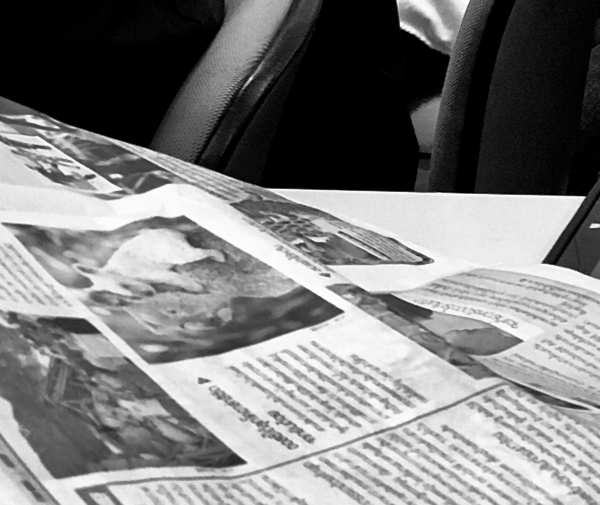
Perhaps the saddest media news I saw this week, although this was inevitable, is the way the Washington Post is to be stripped of staff and of content. A move other media have tried in the past with usually negative results: subscribers dump the newspaper; casual buyers, buy no more; advertisers leave; the newspaper is on life-support for a while and then may linger or die. Jason Koebler (404 Media) thinks that the Washington Post is no longer useful to Jeff Bezos. Matt Growcoot sadly reports that one of the departments savaged is Photography: every single one of its staff photographers. This is like the Chicago Sun-Times in 2013 when all the photographers were dumped, including a Pulitzer Prize winner, and reporters were issued with smartphones Erin Lodi (DP Review).
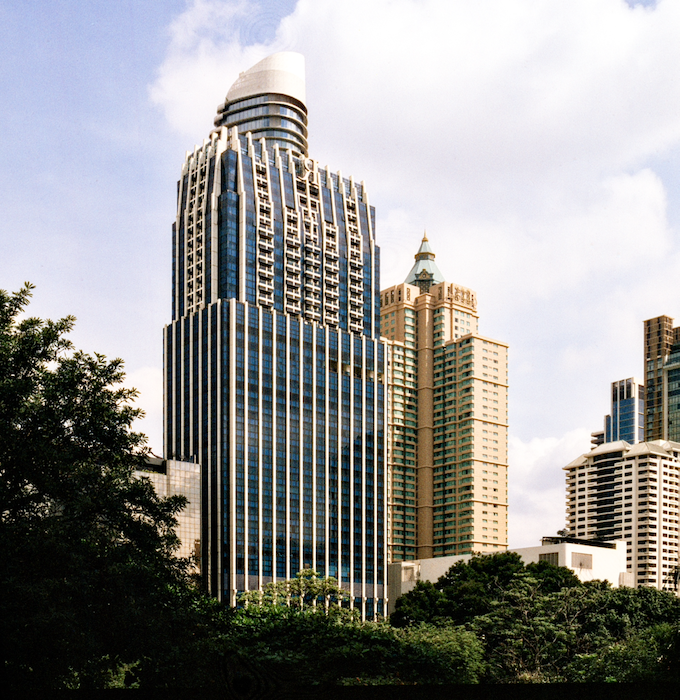
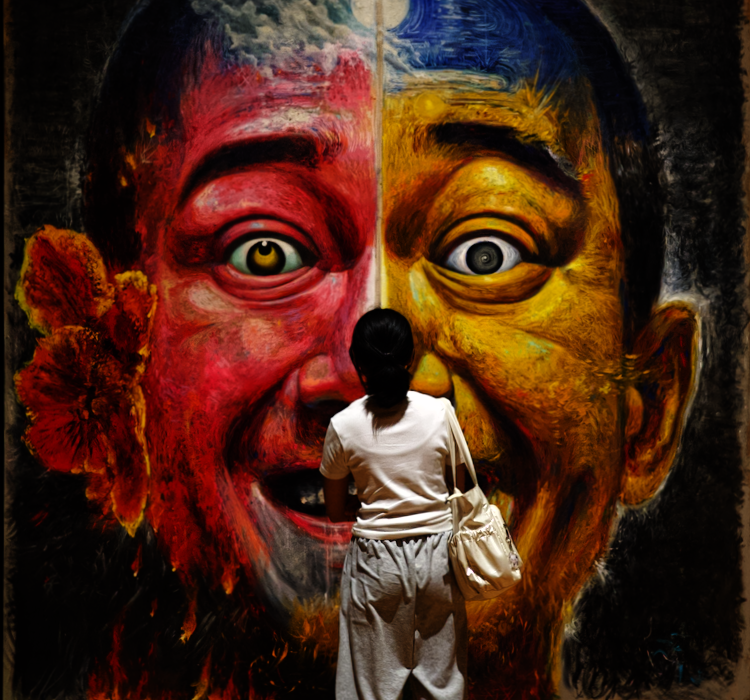
There is a lot to be said for smartphones and there is little doubt that, particularly with the spontansous output they allow, they have changed the way images are presented. There is, too, much to be said for the experience and skills that are being trashed by the Washington Post (the latest in a line of such economies). My own abilities have been honed by my return to film photography, although I certainly still use the DSLR camera and the iPhone. Back in 1986 I was also lucky enough to meet Tony Harvey, the director of the Oscar-winning The Lion in Winter at a dinner in New York. With my limited camera resources, he walked me round the Greenwich area taking photographs. In the couple of hours we had, he taught me more about looking at a scene, than all the tips and hints I could access in photography books. But sometimes you have to be lucky.
|
|
Graham K. Rogers teaches at the Faculty of Engineering, Mahidol University in Thailand. He wrote in the Bangkok Post, Database supplement on IT subjects. For the last seven years of Database he wrote a column on Apple and Macs. After 3 years writing a column in the Life supplement, he is now no longer associated with the Bangkok Post. He can be followed on X (@extensions_th). The RSS feed for the articles is http://www.extensions.in.th/ext_link.xml - copy and paste into your feed reader. No AI was used in writing this item.

For further information, e-mail to
Back to
eXtensions
Back to
Home Page