
1 November 2026
By Graham K. Rogers
Apple had a busy week releasing new products, including a long-rumored touchscreen Mac. I do not understand why this does not have Pencil support with its target of designers and creatives. There have been many comments on the touch screen. While some mentioned Steve Jobs' no-no with regard to ergonomics, time has moved on and many of us use touch to control other devices. An article on crepuscular rays caught my eye - photographing sunbeams. I guess I have been doing this right, without using AI.
Early in the week we had an appetizer of a new OLED iPad mini. If this is the hors d'oeuvre, I wondered, what do we have to come for the main course at the Pro & Tell event? I was surprised again the next evening, when there was an entrée: a MacBook Pro with M6 chip, served with an updated M6 iMac in 2 flavors and a selection of colors. Jason Snell refers to this as clearing the decks, before the big announcement(s). The base models for both of these devices were at the same level as the previous models: 69,900 and 52,900 baht respectively. I took a screen shot of the probable model updates earlier in the month so I would be able to compare the prices.
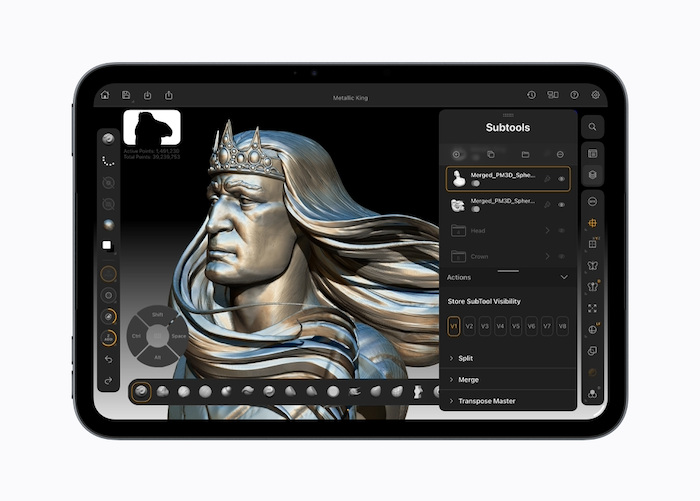
Marcus Mendes (9to5Mac) also comments on how, unlike other recent product releases, Apple has avoided raising prices. I calculated the local pricing using current exchange rates and added 7% VAT giving me 72,337 baht for the basic MacBook Pro, and 54,244 for the iMac. These are slightly higher than I expected, especially in comparison with the iPad mini released a day before which is 24,900 baht here. The $699 US price converts to 23,612.22 baht. Adding 7% for VAT gives 25,265, which means the Thai price is lower than that in the US when taxes are added.
Both devices also retain the same designs as before, but I am never overly-concerned about that. Over in Windows world I worry when I see the plastic frills, flashing LEDs and other design excesses. My Macs are smooth, and they work. We could probably do with a few more ports, though. Malcolm Owen ran a useful comparison between the M4 chips and the new M6. One of the comparisons right at the bottom of his chart is the number of transistors: 46 billion against the 28 billion of the earlier chip. Each transistor replaces the valve that was used in the earliest computers. There were no transistors until late 1947 and they did not come into common use until at least the mid-1950s.
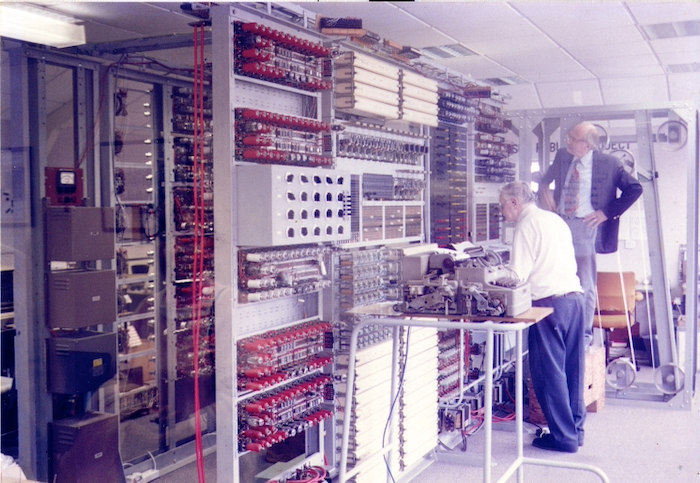
These vacuum tubes were used in radios, televisions, and other electrical devices when I was a kid: maybe 4 or 5 of these: easy to change. Sometimes a bang on the top of the device would make sure they were properly seated. The first version of Colossus, the early analytical computer developed by Tommy Flowers at Dollis Hill for the Enigma code-breakers at Bletchley had some 1600 of these. Now our computers could have 46 billion. This is sure to increase. Ankur Thakur (iDownload Blog) also compared the new iMacs.
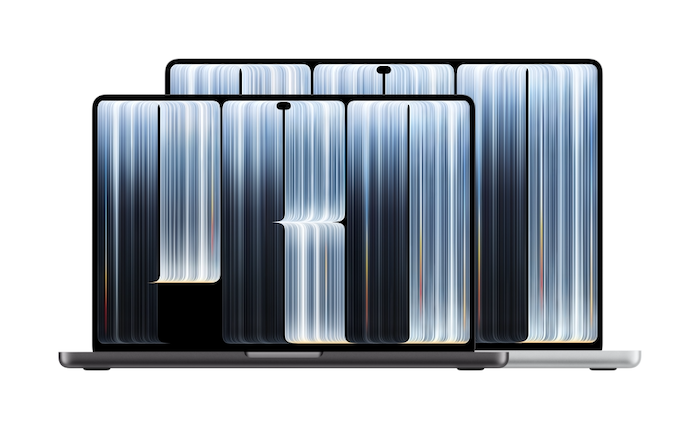
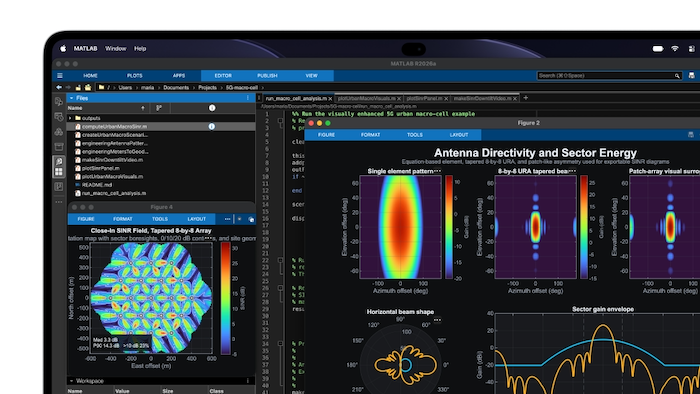
The touchscreen MacBook Pro was announced on Wednesday. First out of the blocks in my timeline was a report from Zac Hall on 9to5Mac. From what I read, this new Mac is not wholly surprising barring one or two omissions. Apple has had a lot of experience with touchscreens. The report does mention a new hinge mechanism. This is to keep the screen stable when there is touch input, which seems fairly typical of the way Apple approaches a new device. The display is called the PROLED XDR which is a bit of a mouthful.
There is a change in the way this screen works, compared to the iPhone and iPad. Information from Apple is included in Hall's report: "the touch sensor is built directly into the display panel - not layered on top of it . . ." which is claimed to reduce latency. For the first time in years, this Mac has an illuminated Apple logo on the lid. This new Mac could have up to 16 TB of storage but that would add some $7,000 to the cost. Note that, even without the touch feature, the OLED screen at 2,000 nits is a significant upgrade and its output will be a boon for professionals.
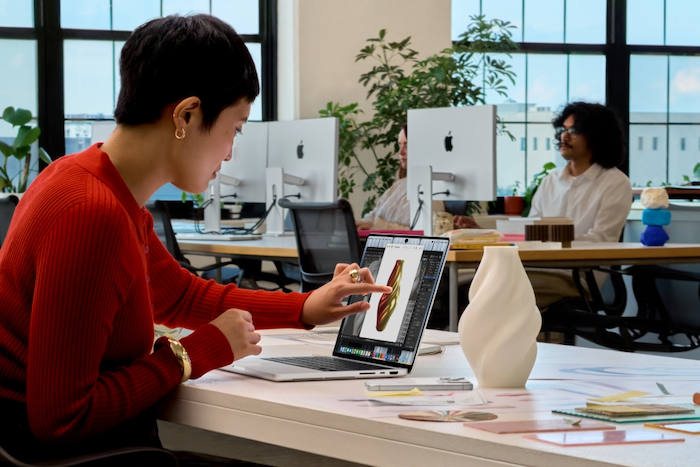
There are two models: 14" and 16", starting at $2,899 and $3,399 respectively. They are listed in the online store for Thailand with a starting price of 104,900 baht. Converting the basic US price of this Mac to Baht and adding VAT, we have (97794 + 7%) 104,640, so the Thai price is acceptably close to the US price. However, there was no mention of Apple Pencil support for this new device, and a reader comment highlights this point in that 9to5Mac article. It makes no sense to me that a feature such as a touch screen on a device which is aimed at creative work, would not have such support. Apple's own images show users working the screen with their fingers. There is nothing about the Apple Pencil in the technical specifications nor in the press release. I wonder how Apple executives will justify this. I read through a number of other articles that had appeared online. Those I think worth looking at are listed here:
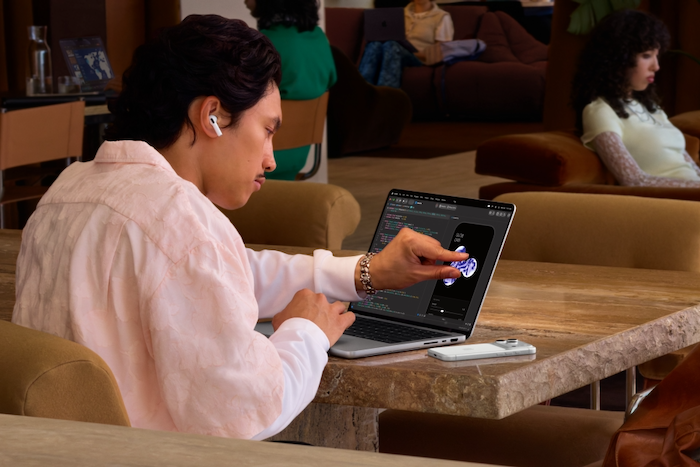
I also read an article by Ed Hardy (Cult of Mac): the only one of several sources I read through that mentioned that there was no support for the Apple Pencil, with the brief, "Touch support does not imply support for Apple Pencil. No version of the stylus works with the MacBook Pro with PROLED XDR Display." He does however, comment on the way touchscreens have been something of a challenge for Apple since Steve Jobs mentioned the problems of ergonomics several years ago. Unfortunately, many saw that as a commandment written in stone, but Hardy makes the same observation I have made several times regarding technical evolution: we are "accustomed to controlling our iPhones and iPads with touch". He adds, "Our Macs were one of the few screens we couldn't control with a fingertip". . . .
This point is brought out by Stephen Hackett (512 Pixels) who report the comments of Steven Levy who had spoken to John Ternus. The final sentence is the clincher, "There's a generation of young creators and young people using our MacBook Pros that expect to touch." These days, I sometimes find myself leaning forward to touch the screen of my MacBook Pro because I am so used to working in this way with the iPad Pro. The complete Steven Levy interview is available on Wired. As well as the comment on touch screens, Levy explains his understanding of Ternus and his drive: the background to how he became CEO.
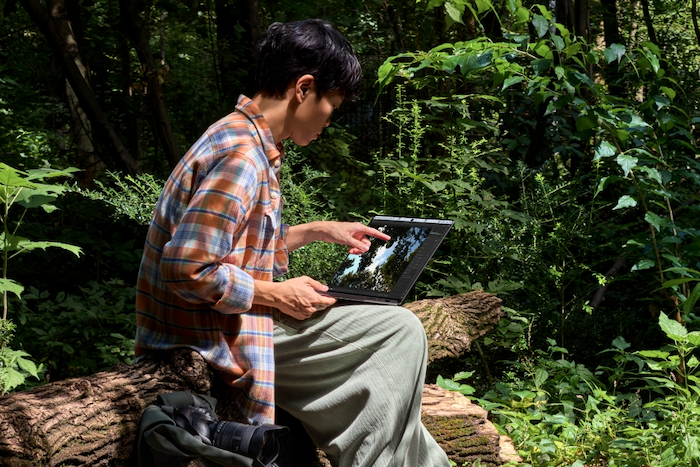
I mentioned above, other omissions and one of these is the lack of FaceID, which according to Anurag Chawake (9to5Mac) has irked some fans. I have other devices like this, but can easily circumvent this with the touch feature or my Apple Watch. Chawake calls this a curious omission, but this would require a range of sensors and a more sophisticated camera system. My own point about the Apple Pencil is partly covered by Mahmoud Itani (MacWorld) who explains that with the 2019 introduction of Sidecar "you can drag Mac windows to your iPad's screen and interact with them as you would on your Mac" using the Apple Pencil and other input devices, but with macOS 27, "you can use your fingers too". Information on how to use this feature is available on an Apple Support page
I saw an interesting comment on X by Randall Knutson and there is much to this [paragraphs adjusted for clarity]: "I've been an Apple fanboy for over 20 years. Bought the first iPhone, iPad, iPods, etc. I am thoroughly unimpressed with their most recent products. No interest in a foldable phone, touchscreen Mac, or a slight bump in performance for the iPhone. Steve Jobs knew that specs don't sell new products. Solving people's problems does. Between these very bad products and their general lack of AI support it may be time to move on. To what is the question".
To what indeed? I rely on the ability to synchronize data between devices, and the longevity of each is a real benefit. The basic format of the MacBook Pro is ideal for me, as is the iPad Pro. Apple Silicon was a huge step forward. Recently, as Knutson implies, we have moved towards gadgetry rather than solid computing advances. Here, too, users pay the full price plus, plus for Apple technology while many features are not available. But gadgets. . . .
We have gone through the arguments about macOS on the iPad a number of times before and Apple really does want to keep these as separate devices. Despite Sidecar (above) a Mac is not an iPad and an iPad is not a Mac, although some seem to think that with the new touchscreen Mac, the lines have been blurred. Jeremy Gray (PetaPixel) thinks that the inability to run macOS on the iPad is absurd. He includes arguments put forward earlier by developers who were not in favor of this: "They are fundamentally different workflows, each suited to different users."
Gray is right that the power is there. I run ipadOS on an M4 device that has more power than my M1 MacBook Pro, while also using the MacBook Neo with its A-series chip, so there is clear that there is some muddying of the waters here. Gray outlines several similarities between the iPad and the Mac, bringing in discussions with Craig Federighi on the question of the respective devices and their operating systems. Gray seems to grasp the differences and the reasons, but he just wants macOS on his iPad. Is there a case for dual operating systems here? I am not wholly convinced. The one Mac feature I would like most is separate user accounts.
One of the several things that irks me with the use of AI in photography is the ability to create sunbeams in an image, where no such light effects had appeared in the original. It was one of the reasons that led to me giving up my use of Luminar. That and the develop-sell-drop model that Skylum seemed to have for its software, which was most recently demonstrated when it announced the end of support for Aperty, despite the promise of this for 5 years. Par for the course.
|
|
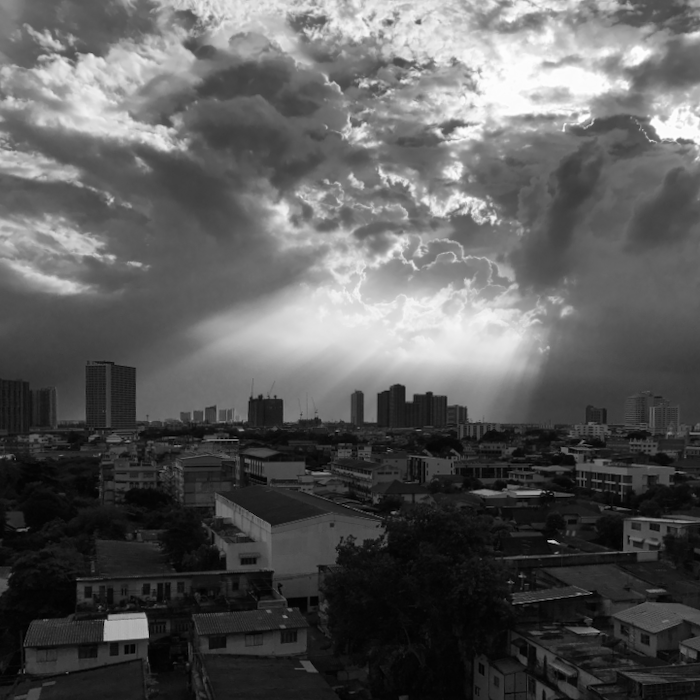
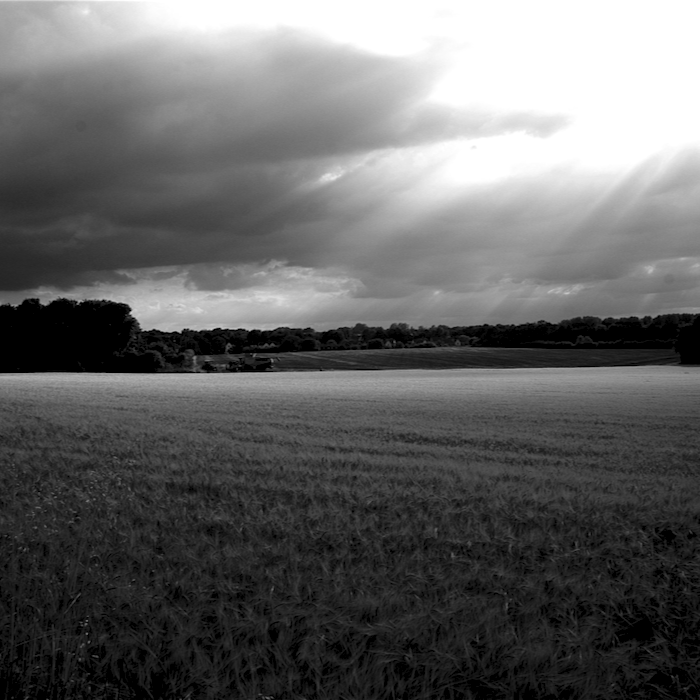
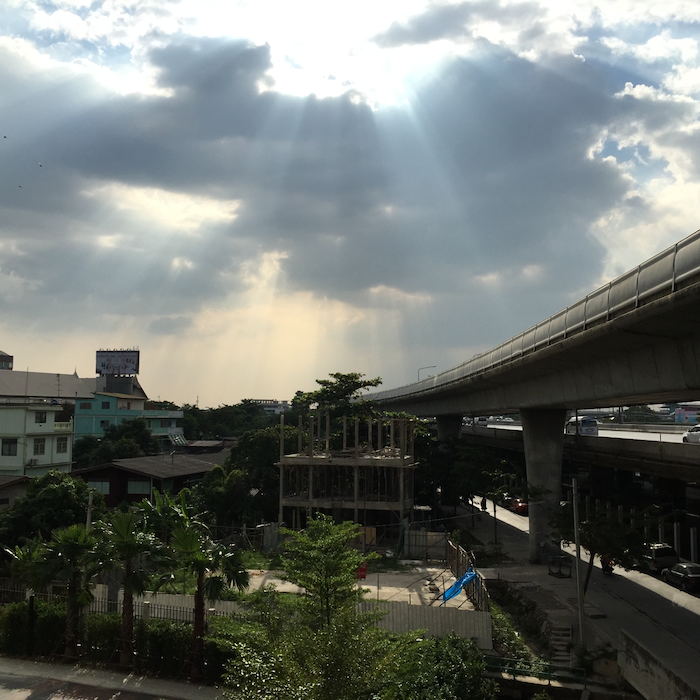
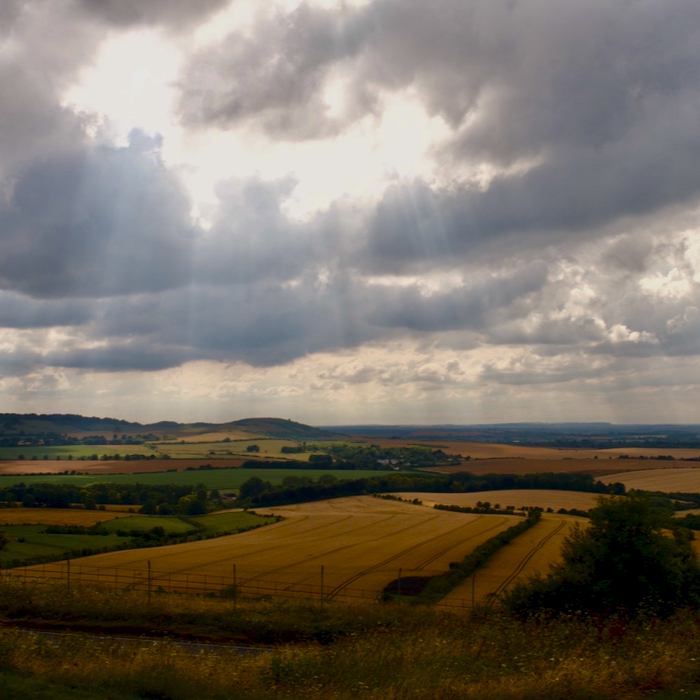
Light beams need a certain care, and quite a bit of luck. I always admire the images from Grand Central Station in New York, particularly one from Hal Morey (Getty). That shot is no longer possible due to the tall buildings that now surround the area. I have tried to produce similar effects naturally and had some minor success with a couple of shots, a few years apart, at the generator building of The Bhumipol Dam in Tak. I recently saw an article in my news feed with the arresting title, "Crepuscular Rays: Master God Beams". Written by Alex Cooke the content takes a longish look at the physics behind such light beams. The full title of the article is, "Crepuscular Rays: Why These Beautiful Beams Happen and How to Be Standing There" - somewhat more pedestrian compared with the link that first caught my eye. The word "crepuscular", the Oxford Dictionary explains, is related to twilight, and comes from the Latin, crepusculum. Creper means obscure, dusky, dark or uncertain.
|
|
Cooke explains why the rays appear to fan and why they do not appear in clean light: it needs something for them to bounce off. In certain conditions, "sunlight strikes airborne particles and scatters toward you". With the images used in the article, this all began to make more sense. There is some information on how to set the camera up for these rays. As Cooke explains, some of this is anti-intuitive. Metering is not to be trusted in general terms, "[e]xpose for the highlights instead". He outlines the conditions that should be best for viewing such phenomena, noting that this is "a watchlist rather than a forecast". I guess that luck plays a part in this as well. Noting the content and the images used, I searched for clouds in my Photos Library and found I did have a fair selection. From a mix of white fluffy ones against a blue sky, to sunsets, stormy skies and
This week the death of Sir Patrick Stewart was announced. He was of course famous as Captain Picard on Star Trek, a part that apparently inspired many to enter the world of science, according to Mohana Basu in Nature. He also starred as Doctor Xavier in the X-Men movies. He was also a renowned Shakespearian actor. In the early 1980s I saw him at Stratford as Leontes in The Winter's Tale, opposite the excellent Sheila Hancock as Hermione, his ill-treated wife. A memorable experience.
Apple has released a trailer for its upcoming Chris Pratt movie, Way of the Warrior Kid. The Kid in the title is played by Jude Hill. In a not-wholly original idea - bullied kid, trained up by SEAL uncle - there are some interesting moments, particularly with Hill's responses. These are sharp and realistic, although perhaps not quite up to the lightning dialogue of Walter Scobell (The Adam Project) with Ryan Reynolds: a high bar. Hill was in the excellent Belfast (Kenneth Branagh) so I am looking forward to the whole movie, which is based on a novel by a former Navy SEAL (Amber Neely, AppleInsider).
This week the thriller-drama, Nocturne arrived on AppleTV with the first two episodes. It is not easy to think of Hannibal Lecter when watching, but Stephen Graham seems far more threatening, while the rest of the cast do their best to solve the problem Jurek (Graham) has set for them, most notably Liev Schreiber, Bill Camp, and the wide-eyed Rory Culkin. Despite the cast, Laura Miller (Slate) is not impressed and pulls apart the script, the settings and outlines some holes in the production. Other critics have instead been fairly enthusiastic.
The second season of Stick is due to appear this week (3 November). The cast including Owen Wilson (Pryce Cahill), Peter Dager (Santi Wheeler) and Timothy Olyphant (Clark Ross) are set to return, but series 2 also adds Rhea Seehorn. It was just revealed that series 2 of Pluribus which stars Ms Seehorn, is about to start filming (Marcus Mendes, 9to5Mac). There is no date for when this might be released but it seems clear that sometime mid- to late-2027 would be the earliest. A note on a panel linking to Foundation on AppleTV now has the comment, "Another season is coming". I am delighted to read that, but there is no further information on when Season 4 might appear.
Graham K. Rogers teaches at the Faculty of Engineering, Mahidol University in Thailand. He wrote in the Bangkok Post, Database supplement on IT subjects. For the last seven years of Database he wrote a column on Apple and Macs. After 3 years writing a column in the Life supplement, he is now no longer associated with the Bangkok Post. He can be followed on X (@extensions_th). The RSS feed for the articles is http://www.extensions.in.th/ext_link.xml - copy and paste into your feed reader. No AI was used in writing this item.

For further information, e-mail to
Back to eXtensions
Back to Home Page