eXtensions - Monday 3 August 2026
By Graham K. Rogers
Apple produced another record quarter, but Wall Street reacted to potential short term headwinds rather than taking any long term view. Opinions on AI: over-investment and poor income leading to a potential bubble - long predicted in some quarters; tokens; weak but costly output. Some notes on The Odyssey, Nolan's workmanship, and critics. Recent TV offerings on Netflix and AppleTV.
At the end of the week, Apple announced its Q3 2026 financial results. The figures were higher than the Wall Street expert consensus again, and a record for the quarter. Mac sales were up. iPhones were up when most of the industry (except Samsung) is showing lower figures (Matt Tate, EnGadget). Services, down. Wearables, up. iPads down. This was Tim Cook's last financial report as he will cede the reins to John Ternus later this year (Juli Clover, MacRumors). Despite the figures, Wall Street immediately started to wring its collective hands and the share price began to fall: future expectations. The pundits rarely look at the long term. The ten year graph of Apple share prices, including stock splits, shows an inexorable rise, with the occasional dip. Wall Street seems more about making the SET a casino. Apple is a long-term investment. The press release from Apple follows:
Apple today announced financial results for its fiscal 2026 third quarter ended June 27, 2026. The Company posted quarterly revenue of $109.4 billion, up 16 percent year over year. Company gross margin was 50.1 percent, including a favorable impact of approximately 2 percentage points from tariff refunds. Diluted earnings per share was $2.02, up 29 percent year over year, and included a favorable impact of $0.11 from tariff refunds.Today, Apple is proud to report our strongest June quarter ever, with double-digit revenue growth across iPhone, Mac and Services, and in every geographic segment," said Tim Cook, Apple's CEO. "At WWDC26, we were thrilled to introduce the all-new Siri AI, alongside all of Apple's latest software innovations and important new child safety features.
We are very pleased with our record business performance during the quarter, which set new June quarter records for both EPS and operating cash flow," said Kevan Parekh, Apple's CFO. "Our installed base of active devices also reached a new all-time high across all major product categories and geographic segments.

Note the final paragraph of the press release, and the continued expansion of the user-base. As well as the views on forward expectations, some were negative because Services saw revenue of 30.7 billion, compared to expectations of $31.4 billion. Considering that Wall Street is often wrong about total revenue of Apple's earnings and other figures (as in this quarter), and Services like Wearables has grown from nothing to producing significant revenue, this is clutching at straws. Force the price down, buy on the dip and profit when the price rises again.
Reacting with some elation to the results, Lewis Wallace produced a list of what he calls, "eye-watering stats": a dozen facts of what Apple is doing, and continues to do. At the end he notes that "in what's becoming a bit of an annoying tradition, Apple's stock price dropped in after-hours trading" adding that (despite these figures) "Wall Street reacted negatively to Apple's subdued estimates for next quarter's revenues". You can please some of the people some of the time, as long as we are not looking at financial markets.
There were a number of useful reports from online sources:
Last week also saw financial reports from Meta, Microsoft and Amazon. All are affected in some way by their reliance on and use of AI, including the data centers that are planned or under construction. AI has wrought many changes in the last couple of years and I am not convinced all of this is good. Some, like NVidia and its CEO are making a lot of money. Consumers are affected by the meteoric rise in the cost of silicon, leading many manufacturers to increase prices.
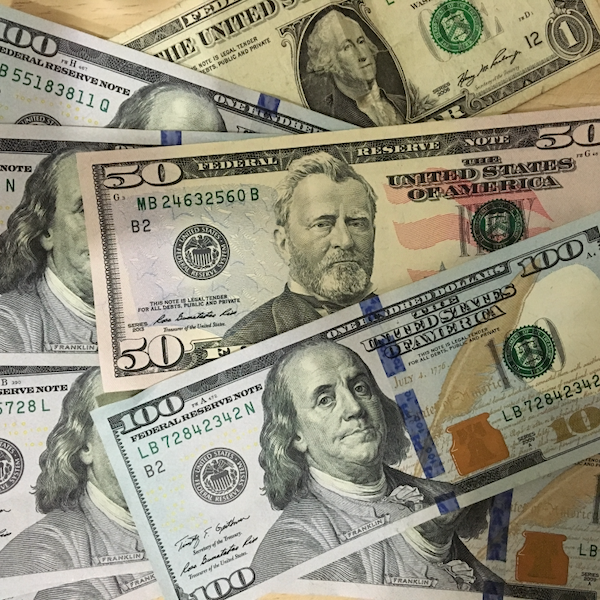 There has been considerable enthusiasm in financial circles. After all, the main AI companies keep asking for more money to build better and bigger LLMs, while increasing the purchases of hardware and energy. That has an effect on the prices that consumers pay for power, noise levels near data centers, and pollution (air and water). Wall Street is delighted with the cash flows for investment, but it has been noted that the cash is not flowing back to the AI companies. This has the makings of what economists call a bubble. And bubbles sometimes burst.
Through links on a number of sites I read an interview on MacRumors (Tim Hardwick) with Ed Zitron on AI. There are some sobering comments here. Zitron has apparently "spent years arguing the buildout driving [the] costs will never pay for itself." He discusses the income from tokens (how users pay for using AI) and subscriptions. He claims that "OpenAI lost $20.9 billion on $13.07 billion in revenue in 2025." That is surely unsustainable, particularly when corporate users have had to adjust their use of tokens (downwards). They were seeing massive costs as they burned through them. We have also seen that some companies are spending as much or more on fixing AI errors (particularly in coding) than they do on the AI. This is similar to my experience with writing output.
Zitron believes that there will be casualties, naming (for example) Oracle and Korean investors in AI. They are spending money, but there are no profits. However, he does note that with the way Apple has structured its AI approach it is unlikely to see damage. He believes that "Apple Intelligence was both the worst and best thing to happen to Apple as far as the AI bubble goes." He notes that early signs "told Apple to pump the brakes." With the impending bubble, he thinks that Apple will "sit on the sidelines and watch everything burn." The interview is fairly lengthy but is well worth reading. I will bookmark this for future reference.
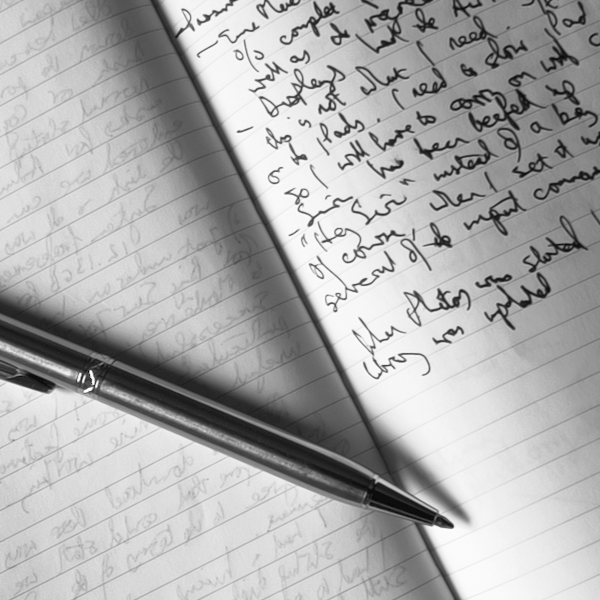 I am frequently disturbed by the writing of students and academics produced using AI. AI is incredibly useful when doing tasks that require examination of large sets of data and presenting findings from these; but placing one word after another, relying on statistical ability, does not work in the same way. Writing is thinking, and AI doesn't think, despite what some leading lights of the AI industry believe. That way madness lies.
There are several problems that are related to the expansion in the use of AI tools. I am reminded of a John Betjeman line in a poem about Oscar Wilde: "Approval of what is approved of is as false as a well-kept vow." In this part of Asia, AI is seen as a life-saver, particularly with regard to writing. Non-native speakers do have problems with producing good writing - heavens, native speakers do as well - so any help is welcome. Sadly, many I have met are rejecting honest help and grasping at the straws that AI proffers. They do not, however, have the skills to recognize that what is produced is not good English. It looks OK. There are plenty of big words. The sentences are mostly grammatical (to be honest we all make mistakes), but it is not good English.
There are also some costs we were not warned about. Some users have been surprised by the amount they have had to pay for the use of tokens, even when (as with Adobe) the AI edits are unacceptable to the user, as Craig Boehman (FStoppers) discussed back in April. Someone has to pay for the vast investments that have been made. This is now bringing some uncomfortable truths to light. Apart from the cost of tokens, the investments in the companies (with AI companies investing in each other), strongly hints at an imminent financial bubble. Jowi Morales (Tom's Hardware) reports that there is some $1.65 trillion of hidden debt ($1.35 trillion is officially listed) and this is affecting companies like Alphabet, Amazon, Meta, Microsoft, and Oracle.
Note that Apple is unlikely to be affected as the approach has been different (see above). Cupertino was widely criticized for its strategy, but the on-device approach and the way it is connecting to LLMs has proved prescient. Bloomberg (paywall) reports on the way NVidia is using these "circular" investments investing in AI companies - the same ones that need the chips. The report cites Dr Michael Burry (of The Big Short fame) who warns against such tactics. Such methods of financing these companies "may skew demand, spur bad decision-making and magnify losses if AI fails to turn profits". If?
The voracious appetite for chips has caused shortages that have lead to price rises of silicon. In turn, these have directly affected the consumer (even those of us who do not use AI knowingly). A Bloomberg newsletter posting last Wednesday reported that "Investors are again bailing on high-profile chipmakers in favor of more economically sensitive industries." The hunger for the vast data centers that use these chips is also causing problems to consumers who live near their locations. Apart from noise, pollution, and other effects like excess water use, these people are suffering higher electricity bills. The AI companies should be paying for the power they use.
Just adding to the mess that AI keeps dishing up, Nick Heer (Pixel Envy) reports on a presentation in Brazil this year from the US State Department to an audience that included members of African states. The map was mislabelled, which is not helpful when strategies are being discussed. It was made using OpenAI tools. As Heer comments, "Shocking nobody."

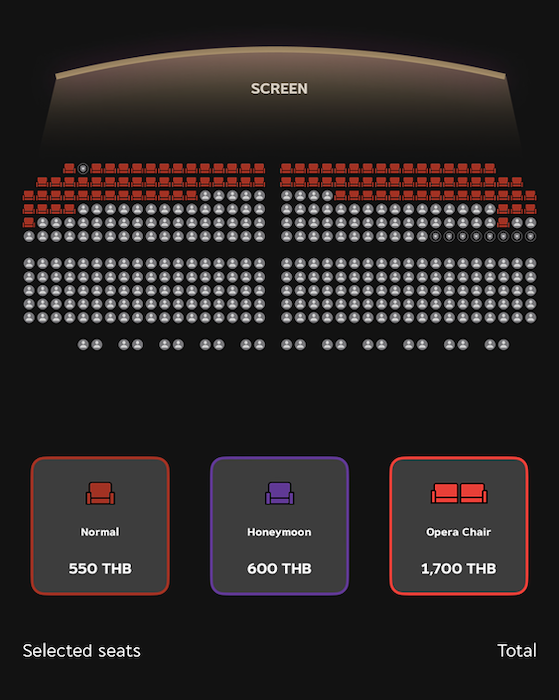
I did manage to view The Odyssey this week. And in the Imax movie house on the upper floors of Siam Paragon. This has the largest screen in Thailand and shows the movies at the 1.43:1 screen ratio (rather than the 1.90:1 of most cinemas). As this was my first visit to a cinema since Covid, I was determined to view the movie in a cinema, particularly this movie which has some impressive technical features, as well as an excellent cast and a superb behind-the-scenes crew. Although I had read separate parts of the Odyssey since school, my main introduction to the story was through the version, rewritten by Vergil: the Aeneid. I read this in Latin as part of my studies at Illinois State University in the mid-1980s. This is also accepted as high Art, with the Odysseus character renamed as Aeneas.
Virgil took ideas from The Odyssey, but changes Calypso to Dido, Queen of Carthage, and the latter parts of the poem to make Aeneas the founder of Rome (Chris Mackie, Latrobe U.). Just imagine if Nolan had done something like that. Some of the severest criticism of the The Odyssey has come from Emily Wilson, whose own translation of The Odyssey is considered one of the best, although it, too, differs from earlier English translations of the work (The Nash, Slate).
Some of the best science fiction movies I know are based on the books of Philip K. Dick, including Blade Runner. This, especially, and the other movies are not the same as the books. 1984 with Richard Burton and John Hurt, is not 100% true to Orwell's original, and the magnificent Lord of the Rings trilogy left out Tom Bombadil among other omissions: an important character in the early part of Frodo's journey. Emily Wilson, whose own version, "replaced neither the original nor any of the earlier translations", criticizes the writing that she claims is abysmal, adding that "[n]one of the characters has convincing motivation for their actions or words. There are no sex scenes, and all the food looks horrible."
With a lack of cooking ranges and no access to Le Creuset kitchenware, what we are shown of food, is either in the background, such as in the palace scenes at Ithaca, where the tensions and action are to the fore; or has a dramatic purpose, like when Circe changes the soldiers into swine on Aeaea: a scene which has been reinterpreted in the several paintings of the event that exist (Getty). No sex? That is almost a relief when one looks at most modern movies (and television now); but there was Love. And anger, suffering, and doubt. Joyce Carol Oates (Catherine Shoard, Guardian), who has also criticized some aspects of the Nolan movie, was concerned about some of Wilson's comments with one response being "this person, who has benefited enormously from Nolan's film, speaks in the crude language of Maga folks attacking someone with ideas that differ from hers".

|
|
Despite booking early, the seats I would have preferred were all taken so I was closer to the screen than I would have liked. The auditorium was packed from the front to the elevated rear. Sitting through the advertisements, and trailers for coming movies, allowed my eyes to adjust to the huge screen. I was left of center and that was a slight problem initially, but I became used to that too. It was all so loud, but as my friend said to me, that is what cinema is like.
It was just as well that I knew the story (more or less), but the time-line was broken with flashbacks and other changes. On the whole this worked for me most of the time. I was pleased to see the storyteller at the feast. Nolan had read Emily Wilson's translation, and may have read others for all I know, so was clearly aware of the genesis of Homer's work. Such stories are passed down for centuries. Some may never have been written down and are lost. Each storyteller would have the main thrust of the events, but would embellish the telling with made up detail. Beowulf is another example as well as the rewriting of that story by John Gardner telling it from Grendel's point of view. Nolan follows that storytelling tradition, so not sticking to the exact text, depending on which translation or versions he used is not a problem for me.
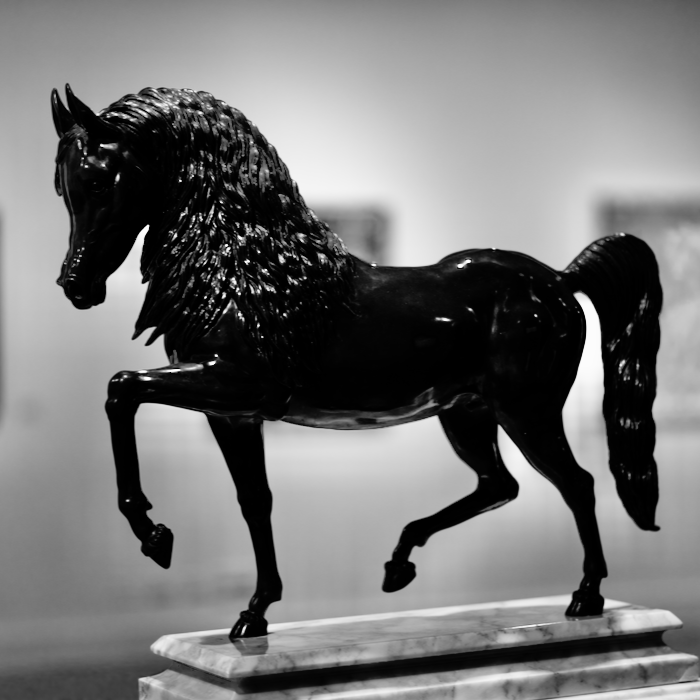 As well as Circe, I had read about Polyphemus and the way his eye was put out. That differed from my imagination of the event but was acceptable nonetheless. A particular effect showing the way Nolan uses cinematic effects rather than computers, was in scenes with the Laestrygonians, giant armoured cannibals. I had read reports that Nolan had hired several unusually tall actors for these supersized characters, but Olivia Bowden (Guardian) adds more in her interview with the diminutive Devyn Dalton: female, 4' 6" (1.37m), and with magnificent arms. The short actor facing the approaching army, with the right camera angle, gives the impression of real giants. If I had not been told, I would have presumed that was Matt Damon.
I have also seen the many representations of the Trojan Horse over the years due not only to its strategic importance, but the cultural significance (malware, corporate weakness, condoms) that has followed. The Trojans worshipped horses which may be why they accepted it so easily, despite warnings from Laocoön and Cassandra (neither featured in the Nolan movie, but not missed). These depictions often show the horse as a massive structure, while inside the soldiers who would open the gates of Troy sat in an ordered configuration. Nolan upended that with the horse cleverly buried in the sand, and the men cramped inside. Not all movies show the dirt. Compare the pristine marble floors and other scenes in The Private Lives of Elizabeth and Essex (1939) with the grittiness of Terry Gilliam's Jabberwocky.
I read the expansive novel by Gabriel Garcia Marquez, 100 Years of Solitude, several years ago and watched the first series of the Netflix version of this - in Spanish with subtitles. Netflix has just posted information about the arrival of Series 2 with a trailer that does not give much away. This is due to arrive on 5 August. Arriving the same day, but on AppleTV is the next season of Ted Lasso.
This week I also watched the BBC/ITV Studios/MGM TV joint production The Bombing of Pan Am 103. I had seen excerpts and was keen to watch this 2025 series. I remember the 1988 event of course and had flown the same route between 1984-86 mainly on TWA planes. News reports fail to convey the full human cost to the families or the emotion invested by so many people in Lockerbie itself and elsewhere. Connor Swindells who appeared throughout, gave a good performance (as did many other members of the cast) managing to control the emotion: its the job.
This week, Apple TV Silo reached the halfway point in Series 3 with Episode 5. This looked at the rescue and how Juliet's memories were suppressed. It also suggests that Sims - now the judge - may not have been as much against Juliet as had earlier appeared. He now has a difficult balancing act to complete, particularly considering that we now know how the Silos are controlled. There was much less of the parallel story in Washington until right at the end which presented a significant clue to viewers.
Graham K. Rogers teaches at the Faculty of Engineering, Mahidol University in Thailand. He wrote in the Bangkok Post, Database supplement on IT subjects. For the last seven years of Database he wrote a column on Apple and Macs. After 3 years writing a column in the Life supplement, he is now no longer associated with the Bangkok Post. He can be followed on X (@extensions_th). The RSS feed for the articles is http://www.extensions.in.th/ext_link.xml - copy and paste into your feed reader. No AI was used in writing this item.

For further information, e-mail to
Back to eXtensions
Back to Home Page