
eXtensions - Wednesday 15 April 2026
By Graham K. Rogers
Despite being announced over a month ago, the Mac Book Neo is still making news: sales, success, diminished supplies of chips; and speculation about a successor. KUBB computer from France - a delightful yet small PC in bright colors. Adobe faces another competitor as Blackmagic Design release beta software for Da Vinci Resolve 21, with photo-editing capabilities. An unusual Polish series on Netflix, based on true events, highlights pollution risks to children and the fight a doctor had for authorities and parents to take action.
Last time, I looked at the Macintosh 512/Ke that a colleague had just had delivered. According to Luke Dormehl (Cult of Mac) this week sees the 50th Anniversary of this very model. His article reveals a couple of interesting points. One includes the opinion of (the already departed from Apple) Steve Jobs, who had a "philosophy that Macs shouldn't be expandable." I was surprised by that considering the Power Mac and Mac Pro computers that followed. At its price in 1976 ($1,999) it would cost some $6,022 today. Compare that with the MacBook Pro, the Mac mini or the MacBook Neo.

|

|
There has been a lot of noise (some from me) about the MacBook Neo. This is one of those "love-at-first-sight" devices that appear from time to time and which I have no hesitation ordering on day one. Here, that is sometimes a couple of weeks after the release in the USA, but that gives me time for cold feet. I did not experience that with the M1 MacBook Pro, M4 iPad Pro, M4 Mac mini or the MacBook Neo. In each case I have been really happy with the device. Zero regrets. Less than a month after the MacBook Neo arrived, another desirable computer has appeared and it is not a Mac.
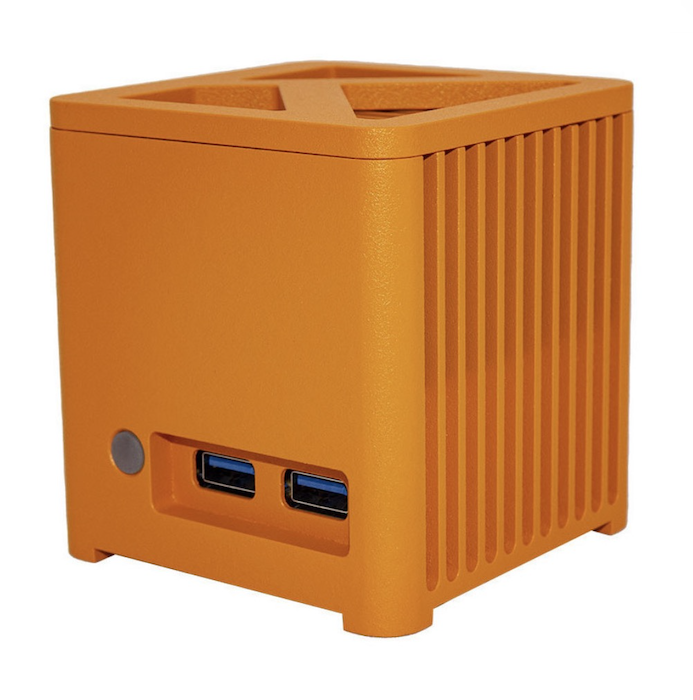
An old Apple device that I still like, despite the problems it had, particularly with heat, was the G4 Mac Cube which was introduced in July 2000. MacTracker notes that in July 2001, "production [was] suspended indefinitely. The size and shape (8"x8"x8"), were limiting factors with the G4 and despite the beautiful design, it was not a success. This week, Mark Tyson (Toms Hardware) reports on a 3" (8 cms) Intel-based cube that is offered for $500 in basic form (with storage and memory options).
|

|
The cube shape and the minuscule size of this caught my eye, but the colors (bright green, red, orange and blue) really make it stand out. It looks plastic, but the article tells me it is aluminum. This would probably help with heat dissipation in this fan-less model. With my antipathy for Windows, I may yet resist this, but how about Linux? After all, with some countries in Europe dumping Windows, and moving to this third OS option, now might be a good time to try something new. A search online showed me this is a no-brainer and the information mentioned that "Official configurations are available with Linux Mint pre-installed." However, the site only shows Windows 11. I have sent a query (no reply as yet). Unfortunately, when I checked the Kubb website I found that the red, orange, blue, green and black models are all out of stock, with the white version running low. The site (based in Toulouse, France) quotes the basic price as €430, including tax (just over 16,200 baht). I have added the orange option to my wishlist.
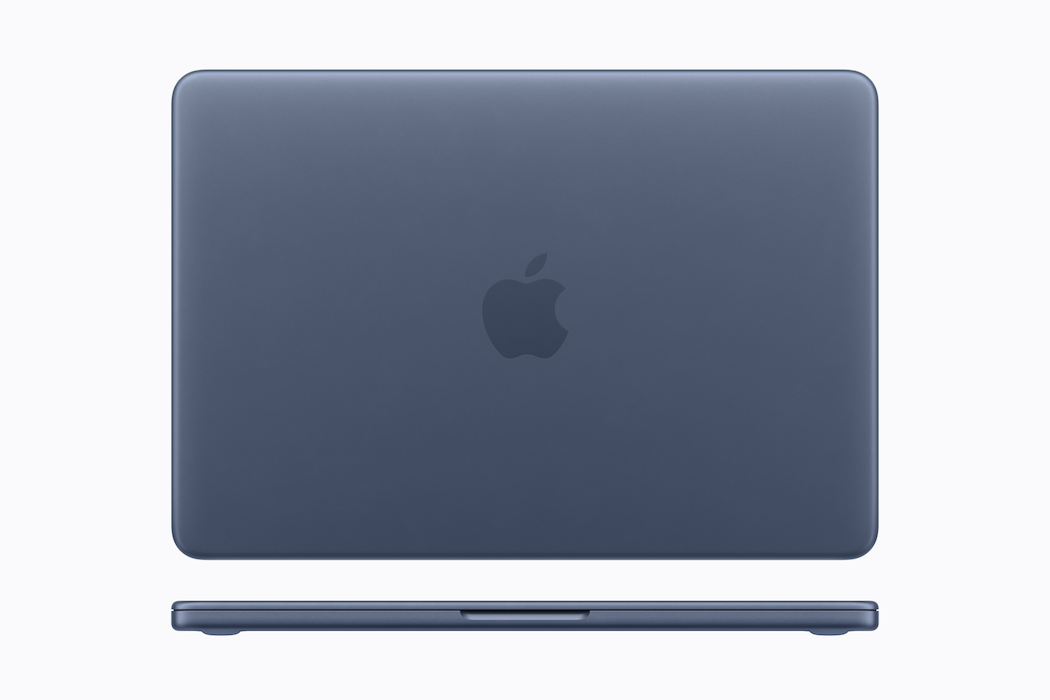
In the light of the Kubb introduction, although it is a desktop device, there are some comparisons with the MacBook Neo, which in its basic form (I upped the specs to the 512 storage option) performs well. Although my requirements are limited these days, I am editing large images with no problems: RAW 65 MB; TIFF scans at 188 MB. Normally the TIFF images are smaller at about 63 MB but I recently took a roll of color and each frame has more data. Lee Morris (FStoppers) also has a look at the editing capabilities of this Apple device and compares the process of working on an M5 MacBook Pro to doing the same tasks on the MacBook Neo. Although the latter is slower, it is capable of doing the work with the AI assistance he admits to.
The KUBB however is more configurable than the MacBook Neo. It has options for chips and storage. Although I am quite happy with the basics of the MacBook Neo, tech experts online are wringing their hands (like they do with the iPad Pro) because it is not a Mac with a range of options. Sales suggest that Apple has hit a sweet spot, although part of that must be due to the pricing. The popularity has brought about another problem: Apple is running low on the binned A18 chips it uses for this device: too much success; hoist by its own petard (Hamlet, 3, 4).
There was some discussion on the problem of chip shortages when this first came to light, although it is expected that a version based on the A19 chip could appear next year. I would hope that could be accelerated and this could be announced later in 2026. I will look closely at the comments of Tim Cook at the Q2 2026 Conference Call in a couple of weeks time (30 April), but will scour online sources for any hints about the future of this device. Ryan Christoffel (9to5Mac) looks at the potential of the A19 in a new version of the MacBook Neo, noting that although speeds are similar to the A18 there is more RAM, more powerful GPU and CPU, and increased efficiency. There is no mention of increased storage.
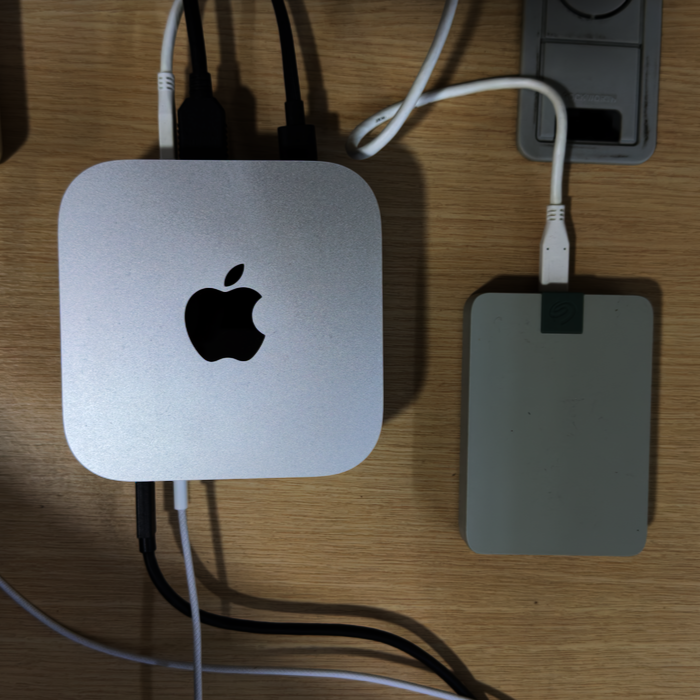 In the article, Christoffel includes a quote from Tim Culpam: despite the success of the MacBook Neo, "Apple was only planning to have suppliers build a new Neo next year" using the A19. That sentence feels as if it should include "but". . . . In a related article with a bit of a twist, William Gallagher and Mike Wuerthele (AppleInsider), noting limited supplies of the Mac mini due to RAM shortages, put forward the idea of a new version of the mini concept, but using an A-series chip. They call it the Mac Neo.
The lengthy article makes a fair argument, although with current A18 shortages, I am unsure if Apple would want to sacrifice sales of a future MacBook Neo for a third Mac mini device (currently powered by the M4 or M4 Pro). Roman Loyola (MacWorld) notes that Microsoft has increased its prices for the surface with the cheapest in the line raised to $1099, blaming the higher cost of memory and other components. While the increases are due to outside factors, the timing is disastrous.
I wrote recently (and several times before) about my antipathy towards Adobe and its products. There are several alternatives, widely used, for photo editing and video work. One of the better-known video editing apps is Da Vinci Resolve. The approach that Canva is taking with Affinity was compared to this when the latter was released: no fee for basics, but pay for the pro features. Jeremy Gray (Petapixel) reports that Blackmagic Design have released an updated version of this video editor, adding that one of the, "biggest new features is a brand-new Photo page that enables colorists and photographers to use Resolve to edit still photos".
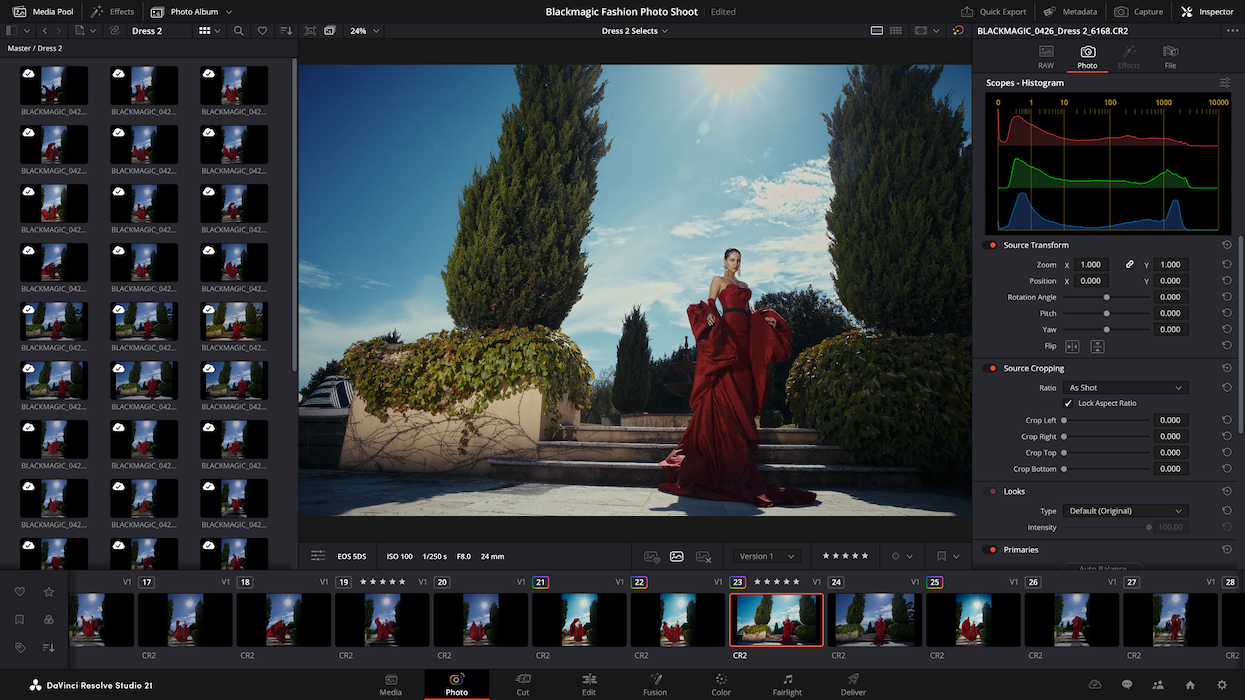
Although it can access Lightroom libraries, I did not see any mention of Photos. For me, the ability to access and sync to iCloud is essential. I checked the Blackmagic Design pages and read through the extensive media release. There appear to be a lot of AI tools in there. I also note that "Sony or Canon cameras can be tethered for direct capture into albums" (a pity about no Nikon for me). Currently the software is available only as a beta. When it is released, Gray writes, "As usual, there will be a free version of DaVinci Resolve 21. A fully-featured version will cost $295 when it is available." I look forward to having a look at this when it arrives. Christopher Malcolm over at FStoppers has downloaded this and has an early look at what this can do. I must admit that I will be tempted as there is a wide variety of tools. Malcolm suggests that this is more like Lightroom than Photoshop, but that suits me just fine as most of my early editing was done on Aperture which was often compared to Lightroom.
My first experience of Polish cinema was when, in the early 1960s, the BBC had a series showing world films. This was transmitted on Friday evenings. Week by week, I would watch some interesting movies. I particularly remember Eisenstein's Alexander Nevsky, with its famous broken ice scene which has been copied in many other movies (Billion Dollar Brain, Apple's Napoleon and more). I also watched Hiroshima, mon Amour and a Polish drama about what followed to resistance fighters after the Warsaw Uprising: Kanał (1957), directed by Andrzej Wajda. The title word means sewer and it was the attempted escape through the tunnels that sticks in my memory: as riveting as Eisenstein's deaths of the Teutonic Knights. In gritty black and white it all seemed so distasteful. Years later I discovered that the material in the sewers was made from cork.

This week I watched a 6-part series in Polish (with subtitles - far better than dubbed English) called, Lead Children. Based on true events it covers the struggle of a doctor in Katowice, Silesia when she discovers several children living near a foundry suffering from lead poisoning. The state and many officials are against what she tries to do, as are the families whose children are sick. This was still several years before Jaruzelski and Lech Walesa. Even the deaths of their children - "it could have been something else" - are unable initially to overcome the arguments about economics and job security that the workers put forward.
It is interesting how propaganda clips are inserted into the content from time to time complementing the lies that the doctor has to face. Despite being a recent (2026) production, the film has a similar color tone, making this feel more like a production of the 1970s than this century. The chimneys at the factory, spewing brown-grey smoke, continuously intrude into the view. There is some clever camera work here as the threat they signify looms larger. A good summary of the series by Alex Webber (TVP World) is available, and an online search brings up several related articles.
Graham K. Rogers teaches at the Faculty of Engineering, Mahidol University in Thailand. He wrote in the Bangkok Post, Database supplement on IT subjects. For the last seven years of Database he wrote a column on Apple and Macs. After 3 years writing a column in the Life supplement, he is now no longer associated with the Bangkok Post. He can be followed on X (@extensions_th). The RSS feed for the articles is http://www.extensions.in.th/ext_link.xml - copy and paste into your feed reader. No AI was used in writing this item.

For further information, e-mail to
Back to eXtensions
Back to Home Page